
Introduction
Understanding the technical branch definition is important for students, job seekers, educators, and professionals who want to build careers in technology-driven industries. Technical branches play a vital role in modern economies because they support innovation, engineering, manufacturing, information technology, healthcare technology, telecommunications, and infrastructure development.
Many students encounter the term “technical branch” while researching educational pathways, engineering disciplines, vocational programs, and career opportunities. Despite its widespread use, many people remain unsure about what a technical branch actually means, how it differs from non-technical fields, and what career opportunities it offers.
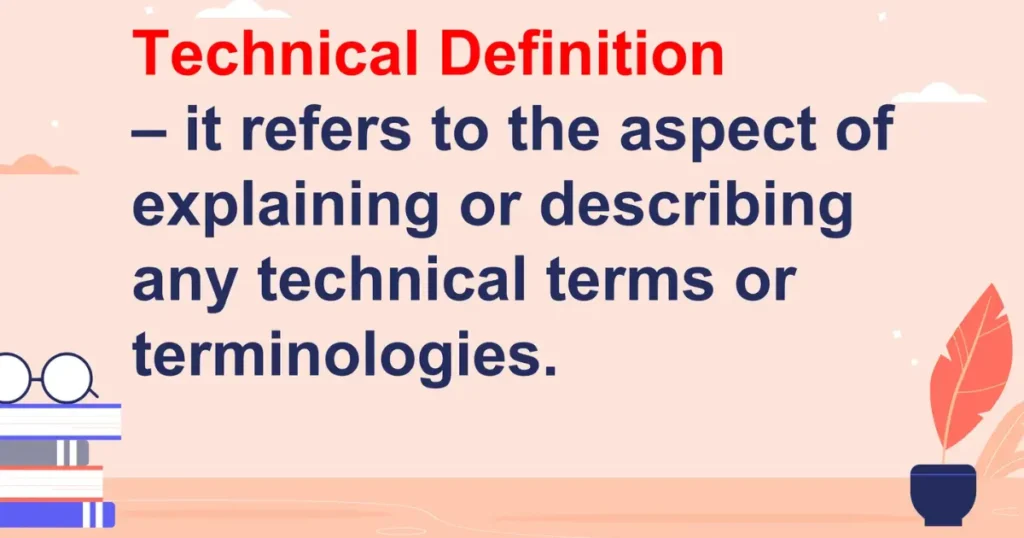
A technical branch refers to a specialized field that focuses on technical knowledge, scientific principles, practical skills, engineering applications, technological systems, and problem-solving methodologies. These branches require individuals to understand technical concepts and apply them to real-world situations.
Organizations across industries rely on technical professionals to design products, maintain systems, solve complex challenges, improve processes, and develop innovative solutions. As technology continues to evolve, the demand for technical expertise remains strong in both public and private sectors.
This comprehensive guide explains the meaning of technical branches, explores their major categories, highlights examples, discusses career prospects, and provides valuable insights for students considering technical career paths.
Technical Branch Definition
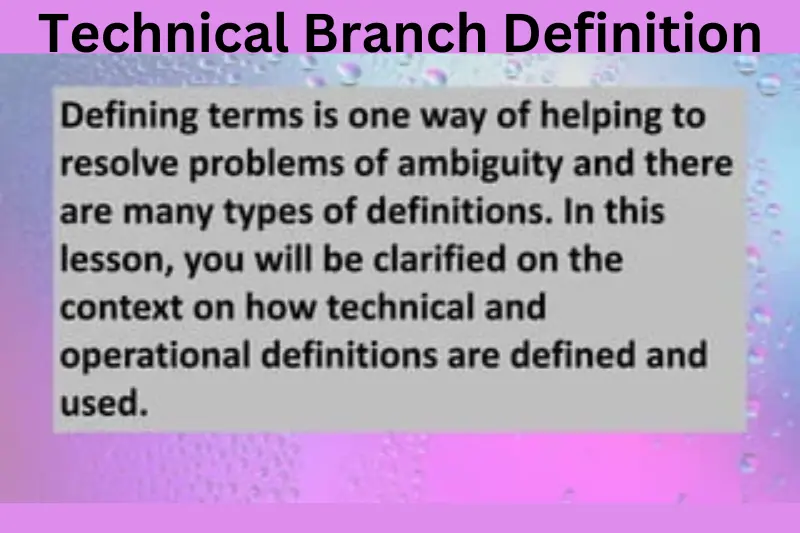
The technical branch definition can be described as a specialized area of study, work, or expertise that focuses on scientific knowledge, technical skills, engineering principles, technology applications, and practical problem-solving.
Technical branches involve the use of specialized tools, equipment, software, systems, and methodologies to perform tasks and achieve objectives. Professionals working in technical branches often require formal education, technical training, certifications, or hands-on experience.
Technical branches are commonly associated with engineering, computer science, information technology, electronics, telecommunications, industrial systems, healthcare technology, and scientific research. These fields require analytical thinking and technical competence.
Unlike non-technical branches that may focus primarily on management, communication, administration, or social sciences, technical branches emphasize practical applications of scientific and technological knowledge.
What Is a Technical Branch?
A technical branch is a field that requires specialized technical knowledge and practical skills to perform professional duties. These branches often involve designing, building, operating, maintaining, testing, or improving systems, products, and processes.
Technical professionals use technical expertise to solve problems and create solutions. Their work contributes to innovation, productivity, efficiency, safety, and technological advancement.
Technical branches exist in nearly every industry. Manufacturing companies employ mechanical engineers and automation specialists. Healthcare organizations rely on medical technology experts. Information technology firms hire software developers and cybersecurity professionals. Construction projects require civil engineers and technical designers.
The common characteristic among all technical branches is the application of technical knowledge to achieve measurable outcomes.
Characteristics of a Technical Branch
Technical branches share several important characteristics that distinguish them from other professional fields.
The first characteristic is specialized knowledge. Technical professionals possess expertise in specific subjects such as engineering principles, programming languages, electronic systems, medical equipment, or industrial technologies.
The second characteristic is practical application. Technical branches focus on applying theoretical concepts to real-world situations. Professionals use their knowledge to solve problems, improve systems, and create innovative solutions.
The third characteristic is continuous learning. Technology evolves rapidly, requiring professionals to update their skills regularly. Certifications, training programs, workshops, and professional development activities are common within technical fields.
Another defining characteristic is analytical thinking. Technical professionals often evaluate data, identify issues, develop solutions, and optimize processes.
Technical branches also involve measurable outcomes. Success is often assessed through performance metrics, functionality, efficiency, reliability, safety, and productivity.
Why Technical Branches Are Important
Technical branches contribute significantly to economic growth, technological innovation, infrastructure development, and societal advancement.
Modern transportation systems depend on technical expertise. Roads, bridges, airports, railways, and communication networks are designed and maintained by technical professionals.
Healthcare organizations rely on technical branches to develop medical devices, diagnostic equipment, laboratory systems, and healthcare technologies.
The information technology sector depends entirely on technical expertise. Software applications, cloud computing platforms, cybersecurity systems, artificial intelligence solutions, and digital infrastructure all originate from technical branches.
Technical branches also support manufacturing, energy production, telecommunications, environmental protection, automation, and research.
Without technical professionals, many of the technologies and services people use daily would not exist.
Types of Technical Branches
Technical branches can be categorized into multiple areas based on industry specialization and technical expertise.
Engineering branches represent one of the largest categories. These include mechanical engineering, civil engineering, electrical engineering, chemical engineering, aerospace engineering, and industrial engineering.
Information technology branches focus on software development, cybersecurity, data science, cloud computing, artificial intelligence, networking, and systems administration.
Electronics and telecommunications branches deal with communication systems, electronic devices, wireless technologies, and network infrastructure.
Healthcare technology branches involve biomedical engineering, medical imaging technology, laboratory technology, healthcare informatics, and medical equipment management.
Industrial technology branches support manufacturing operations, automation systems, robotics, quality control, and production management.
Environmental technology branches focus on sustainability, waste management, renewable energy, environmental monitoring, and resource conservation.
Engineering Technical Branches
Engineering represents one of the most recognized technical branch categories. Engineering professionals apply scientific and mathematical principles to design, develop, and improve systems, structures, machines, and processes.
Mechanical engineering focuses on machines, engines, manufacturing systems, and mechanical devices. Mechanical engineers work across industries including automotive, aerospace, energy, and manufacturing.
Civil engineering deals with infrastructure projects such as roads, bridges, buildings, dams, tunnels, and transportation systems. Civil engineers play an essential role in urban development and public infrastructure.
Electrical engineering focuses on power systems, electrical equipment, electronics, communication systems, and renewable energy technologies.
Chemical engineering combines chemistry, physics, mathematics, and engineering principles to develop industrial processes and products.
Aerospace engineering specializes in aircraft, spacecraft, satellites, propulsion systems, and aviation technologies.
These engineering disciplines form the foundation of many technical industries worldwide.
Related Posts:



Information Technology Technical Branches
Information technology has become one of the fastest-growing technical sectors globally. Organizations increasingly depend on digital systems and technology solutions.
Software development focuses on creating applications, operating systems, enterprise software, mobile applications, and digital platforms.
Cybersecurity professionals protect systems, networks, and data from cyber threats. Their expertise is essential for maintaining digital security.
Data science specialists analyze large datasets to identify trends, improve decision-making, and support business intelligence initiatives.
Cloud computing experts design and manage cloud infrastructure, enabling organizations to access scalable technology resources.
Artificial intelligence professionals develop intelligent systems capable of learning, automation, prediction, and advanced problem-solving.
Network engineers manage communication systems that connect users, devices, and organizations worldwide.
These information technology branches offer strong career opportunities due to increasing digital transformation.
Healthcare Technical Branches
Healthcare technology combines medical science with technical expertise. Professionals in these branches support patient care, diagnostics, treatment, and healthcare operations.
Biomedical engineering focuses on designing medical devices, diagnostic equipment, prosthetics, and healthcare technologies.
Medical laboratory technology involves analyzing biological samples to support disease diagnosis and treatment decisions.
Radiologic technology uses advanced imaging equipment such as X-ray systems, MRI scanners, and CT scanners.
Health informatics specialists manage healthcare information systems and electronic medical records.
Clinical engineering professionals maintain and optimize medical equipment used in hospitals and healthcare facilities.
Healthcare technical branches continue to expand as medical technologies become increasingly sophisticated.
Examples of Technical Branches in Different Industries
Technical branches exist across numerous industries and sectors.
The automotive industry employs mechanical engineers, manufacturing specialists, robotics technicians, and automotive technology experts.
The energy sector relies on electrical engineers, renewable energy specialists, environmental engineers, and power systems professionals.
The telecommunications industry employs network engineers, communication technology experts, and infrastructure specialists.
The construction sector depends on civil engineers, surveying professionals, architectural technologists, and project engineers.
The software industry requires developers, cybersecurity analysts, data scientists, and cloud computing specialists.
The healthcare sector employs biomedical engineers, laboratory technologists, imaging specialists, and healthcare information professionals.
These examples demonstrate the widespread influence of technical branches throughout modern society.
Technical Branch vs Non Technical Branch
Understanding the difference between technical and non-technical branches helps students make informed educational and career decisions.
Technical branches emphasize specialized knowledge, technical skills, engineering principles, scientific applications, and technology-based problem-solving. Professionals often work with systems, equipment, software, data, or technical processes.
Non-technical branches typically focus on communication, management, administration, education, marketing, finance, law, human resources, and social sciences. Success often depends on interpersonal skills, leadership abilities, strategic thinking, and organizational expertise.
Both branches offer valuable career opportunities. The choice depends on individual interests, strengths, educational goals, and professional aspirations.
Career Opportunities in Technical Branches
A technical branch opens doors to a wide range of career opportunities across industries. As businesses become increasingly dependent on technology, professionals with specialized technical knowledge are in high demand. Whether a student chooses engineering, information technology, healthcare technology, or industrial automation, numerous employment options are available.
Software development remains one of the most popular career paths. Software engineers design, develop, test, and maintain applications used by individuals and organizations worldwide. Companies actively seek professionals skilled in programming languages, cloud computing, artificial intelligence, and cybersecurity.
Mechanical engineers work in manufacturing, automotive production, robotics, aerospace, and energy sectors. Their responsibilities include designing machines, improving production systems, and developing innovative mechanical solutions.
Civil engineers contribute to infrastructure projects such as roads, bridges, railways, dams, and smart cities. Governments and private organizations continue investing heavily in infrastructure development, creating long-term employment opportunities.
Electrical engineers play a critical role in power generation, renewable energy systems, electronics, telecommunications, and industrial automation. Growing adoption of clean energy technologies has increased demand for qualified professionals.
Technical graduates can also pursue careers in data science, machine learning, network administration, cloud engineering, technical consulting, quality assurance, project management, and research and development.
Many professionals eventually move into leadership roles, becoming engineering managers, technical directors, chief technology officers, or business owners.
Essential Skills Required for Success in a Technical Branch
Success in a technical branch depends on a combination of technical expertise and professional skills. Educational qualifications alone are not enough in today’s competitive job market.
Problem-solving skills are among the most important competencies. Technical professionals frequently encounter challenges that require analytical thinking and practical solutions. Employers value individuals who can identify issues and implement effective strategies.
Mathematical and logical reasoning abilities form the foundation of many technical disciplines. Engineering calculations, software algorithms, data analysis, and system design all require strong analytical skills.
Technical communication is equally important. Engineers and technical specialists must explain complex concepts clearly to colleagues, clients, and stakeholders.
Computer literacy has become essential across nearly every technical field. Familiarity with software tools, digital platforms, and data management systems improves workplace efficiency and productivity.
Teamwork and collaboration skills help professionals succeed in multidisciplinary environments. Modern projects often involve experts from various departments working together toward common objectives.
Adaptability is another critical skill because technology evolves rapidly. Professionals who continuously learn and update their knowledge remain competitive throughout their careers.
Time management, project planning, attention to detail, and creativity further enhance professional performance and career growth.
Educational Pathways for Technical Branch Students
Students interested in technical branches can choose from several educational pathways depending on their career goals and academic interests.
The journey often begins in secondary school with subjects such as mathematics, physics, chemistry, computer science, and technical drawing. Strong performance in these subjects provides a solid foundation for advanced studies.
Diploma programs offer practical and industry-focused education. These programs typically require less time than a bachelor’s degree and prepare students for entry-level technical positions.
Bachelor’s degree programs remain the most common pathway for technical careers. Engineering, computer science, information technology, biotechnology, and architecture programs provide comprehensive theoretical and practical knowledge.
Students seeking advanced expertise may pursue master’s degrees in specialized areas such as artificial intelligence, robotics, structural engineering, cybersecurity, or renewable energy systems.
Doctoral programs are suitable for individuals interested in research, innovation, and academic careers. PhD graduates often contribute to technological advancements and scientific discoveries.
Professional certifications can significantly improve employability. Certifications validate specialized skills and demonstrate commitment to continuous learning. Areas such as cloud computing, cybersecurity, networking, project management, and data analytics offer valuable certification opportunities.
Internships, apprenticeships, laboratory projects, and industry training programs help students gain practical experience before entering the workforce.
Related Posts:
Future Scope of Technical Branches
The future of technical branches appears exceptionally promising due to rapid technological advancement and global digital transformation.
Artificial intelligence continues reshaping industries ranging from healthcare and finance to manufacturing and education. Technical professionals with AI expertise are expected to remain highly sought after.
Robotics and automation are transforming production environments worldwide. Industries increasingly rely on automated systems to improve efficiency, reduce costs, and enhance quality control.
Cybersecurity has become a major priority for organizations of all sizes. As cyber threats increase, demand for cybersecurity specialists is expected to grow substantially.
Renewable energy technologies create opportunities for electrical, mechanical, and environmental engineers. Solar power, wind energy, energy storage systems, and smart grids represent expanding sectors.
Cloud computing and data analytics continue driving business innovation. Organizations require skilled professionals who can manage data infrastructure and derive valuable insights from large datasets.
Healthcare technology is another rapidly growing field. Advances in medical devices, telemedicine, biotechnology, and digital health solutions generate new technical career opportunities.
Smart cities, autonomous vehicles, Internet of Things devices, and advanced communication networks will further increase demand for qualified technical professionals over the coming decades.
Salary Potential in Technical Careers
Salary potential within technical branches varies based on specialization, education level, experience, geographic location, and industry demand.
Entry-level technical professionals typically receive competitive salaries compared to many non-technical occupations. Engineering and technology graduates often begin their careers with attractive compensation packages.
Software developers, data scientists, cybersecurity analysts, cloud engineers, and AI specialists frequently earn above-average salaries due to strong market demand.
Mechanical, civil, and electrical engineers also enjoy stable earning potential, especially when working on large-scale industrial, infrastructure, or energy projects.
As professionals gain experience, their salaries generally increase significantly. Senior engineers, technical consultants, project managers, and technology executives often command substantial compensation.
Specialized certifications and advanced degrees can further improve earning potential by demonstrating expertise in high-demand areas.
Freelancing and consulting opportunities provide additional income possibilities for experienced technical professionals who possess specialized skills and industry knowledge.
Frequently Asked Questions About Technical Branches
What is a technical branch?
A technical branch is a field of study or professional specialization focused on applying scientific, engineering, technological, or practical knowledge to solve real-world problems.
Which technical branch has the highest demand?
Demand varies by region and industry, but software engineering, artificial intelligence, cybersecurity, data science, and renewable energy engineering are among the fastest-growing fields.
Is a technical branch better than a non-technical branch?
Neither is inherently better. The right choice depends on a student’s interests, strengths, career goals, and preferred working environment.
Can students switch technical branches later?
Yes. Many students transition between related technical disciplines through additional coursework, certifications, or postgraduate education.
Do technical branches require strong mathematics skills?
Many technical fields rely heavily on mathematics, although the required level varies by specialization. Computer science, engineering, and data analytics generally require strong mathematical foundations.
What are the best technical branches for future careers?
Artificial intelligence, cybersecurity, cloud computing, robotics, biotechnology, renewable energy engineering, and data science are widely considered promising future-oriented technical branches.
Conclusion
Understanding what a technical branch is helps students make informed educational and career decisions. Technical branches combine scientific knowledge, practical skills, and innovation to solve real-world challenges. From engineering and information technology to biotechnology and renewable energy, technical fields offer diverse opportunities for learning, growth, and professional success.
As industries continue embracing digital transformation and technological innovation, demand for skilled technical professionals will remain strong. Students who develop technical expertise, problem-solving abilities, and a commitment to continuous learning can build rewarding and future-ready careers in virtually every sector of the global economy.