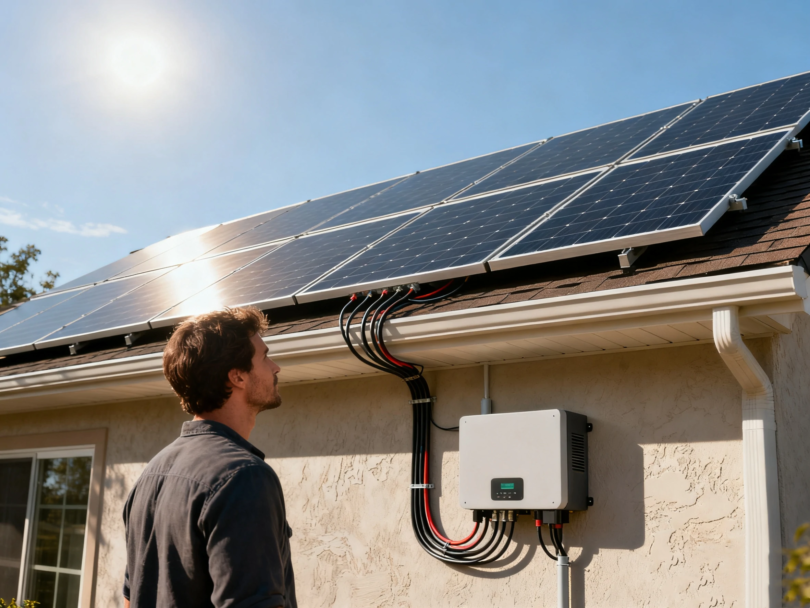

Review MPPT allocation, string layout, overvoltage protection and monitoring at the exact project scale. This is a familiar challenge in commercial power projects, where decisions made early can restrict operation for years. Failures usually develop at the interface between otherwise competent teams. Reviewing the actual service environment is often more revealing than collecting another impressive efficiency figure.
Value Production at the Right Time
Self-consumed solar energy, exported electricity and avoided demand charges have different commercial values. A proposal should show the dispatch or consumption assumptions used for each. Multiplying annual energy by a headline retail tariff is rarely sufficient. Evaluate scenarios where operations move, tariffs change or tenants occupy the building differently.
Think About Site Expansion
Businesses rarely hold their electrical requirements constant for twenty years. A new production line, freezer or fleet charger may change how on-site solar is used. Keep future distribution routes and operating flexibility in view. However, do not assume every possible expansion is certain enough to justify an oversized initial installation.
For a broader technical starting point, compare a smart string inverter with the conditions actually documented in the proposed project. Review MPPT allocation, string layout, overvoltage protection and monitoring at the exact project scale.
Ask for Comparable Evidence
References should resemble the proposed installation in roof type, grid conditions and business operating pattern. A case study with a spectacular annual yield under different weather is not a substitute for an engineering estimate. Request sample maintenance reports and performance assumptions. The most valuable vendor evidence helps explain performance variation, not just a perfect outcome.
Confusing storage cabinets with inverters in a procurement schedule can lead to mismatched equipment and commercial disputes.
Understand Monitoring Limits
A monitoring app can reveal production, consumption and equipment status, but its usefulness depends on correct meter placement and network connectivity. Owners need to know which data are measured and which are estimated. When a communication link fails, local electrical safety functions must remain independent of the app display.
Treat Dispatch as a Policy
Charging and discharging rules should be written down before choosing control hardware. Priorities might include avoiding export, reducing demand charges, preserving emergency reserve or following a time-of-use tariff. Those objectives can conflict. A clear hierarchy prevents operators from treating an unexpectedly low state of charge as an equipment fault when it was actually a scheduling decision.
The design review for a smart string inverter should be supported by evidence tied to the delivered configuration. Confirm inverter model documents against the actual product link and site single-line diagram.
Model Revenue Conservatively
Avoid combining every possible benefit at its maximum value. A battery cannot simultaneously dedicate the same capacity to energy shifting, demand reduction and emergency reserve. Work with mutually consistent dispatch scenarios, including low-utilization periods. The most persuasive financial model shows which benefits remain under less favorable prices, loads and weather.
Readers comparing specifications can review information about smart string inverter as context, then verify site-specific claims with drawings, tests and commercial terms.