
Introduction
Food is one of the most essential requirements of life. Every living organism needs food or obtains nutrients from its environment to survive, grow, and perform daily activities. For humans, food provides energy, supports body development, repairs damaged tissues, and helps maintain normal body functions. It also plays an important role in culture, traditions, social relationships, agriculture, and economic development.
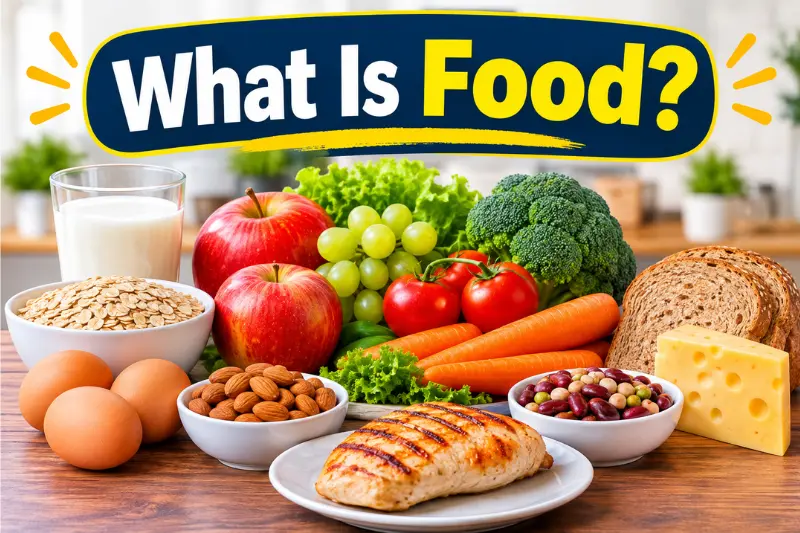
What is food? Food refers to any substance that living organisms consume or absorb to obtain nutrients and energy needed for survival and normal biological functions. Human food comes from different sources, including plants, animals, fungi, and other natural materials. Common examples include fruits, vegetables, grains, milk, eggs, meat, fish, nuts, and legumes.
Understanding food involves more than knowing what people eat. It also includes learning about its types, sources, nutritional components, food groups, preparation methods, preservation, and safety. These subjects are closely connected with nutrition and the scientific study of food. Readers interested in the academic and professional fields related to food can also explore Fullipedia’s guide to Food Branch.
This article explains the meaning of food, its major types, natural sources, essential nutrients, importance, and role in human life.
What Is Food?
Food is any edible or consumable substance that provides nutrients, energy, or other essential materials required by an organism. In humans, food supplies carbohydrates, proteins, fats, vitamins, minerals, and water, which support different physical and biological processes.
The human body uses nutrients obtained from food to produce energy, build muscles, maintain bones, repair cells, regulate body temperature, and support the immune system. Different foods contain different combinations of nutrients, which is why eating a variety of foods is important for maintaining nutritional balance.
For example, rice, wheat, potatoes, and oats provide carbohydrates, while eggs, fish, beans, milk, and meat provide protein. Fruits and vegetables supply vitamins, minerals, dietary fibre, and other beneficial compounds. Nuts, seeds, vegetable oils, and some animal products provide dietary fats.
Food also has cultural and social importance. People prepare traditional meals for celebrations, religious occasions, family gatherings, and community events. Food habits differ across countries because of climate, geography, agricultural production, religion, economic conditions, and cultural traditions.
According to the World Health Organization (WHO), a healthy diet should provide adequate nutrients and energy while maintaining balance, moderation, and dietary diversity.
Definition of Food
Food can be defined as a substance consumed by humans or other living organisms to obtain nutrients and energy necessary for growth, development, maintenance, and survival.
In biological terms, food provides materials that organisms use to perform essential life processes. These materials support metabolism, tissue development, cellular repair, and other functions required to maintain life.
From a nutritional perspective, food is a source of essential and non-essential nutrients. Essential nutrients must be obtained through the diet because the body cannot produce enough of them to meet its requirements.
Examples of food include:
- Plant-based foods: Rice, wheat, fruits, vegetables, beans, and nuts.
- Animal-based foods: Milk, eggs, meat, fish, and poultry.
- Processed foods: Bread, cheese, canned vegetables, yogurt, and packaged cereals.
- Natural foods: Fresh fruits, vegetables, whole grains, and unprocessed nuts.
Food is not limited to substances that provide energy. Some foods supply vitamins and minerals needed in small quantities, while others provide dietary fibre that supports digestive health.
What Are the Main Types of Food?
Food can be classified in several ways, depending on its nutritional composition, source, function, and level of processing. These classifications help people understand the role of different foods in human nutrition.
The following are some commonly recognized types of food.
1. Energy-Giving Foods
Energy-giving foods supply the calories required for physical activity, body movement, and essential biological processes. They mainly contain carbohydrates and fats, although proteins can also provide energy.
Common examples include:
- Rice
- Bread
- Potatoes
- Pasta
- Oats
- Corn
- Vegetable oils
- Nuts and seeds
Carbohydrates are an important energy source for the human body. Whole grains, fruits, vegetables, and legumes provide carbohydrates along with fibre and other nutrients.
Fats provide concentrated energy and help the body absorb fat-soluble vitamins. However, the quality and quantity of dietary fat matter. Unsaturated fats from foods such as nuts, seeds, fish, and certain vegetable oils are generally preferable to excessive saturated and industrial trans fats.
2. Body-Building Foods
Body-building foods provide nutrients required for growth, muscle development, tissue repair, and maintenance of body structures. Protein is the main nutrient associated with these functions.
Examples include:
- Eggs
- Fish
- Chicken
- Milk
- Yogurt
- Cheese
- Beans
- Lentils
- Soybeans
- Nuts
Proteins are made of amino acids, which the body uses to build and maintain muscles, skin, enzymes, and other important structures.
Animal-based foods can provide complete protein, while plant-based diets can supply adequate protein through a variety of sources, including legumes, soy products, grains, nuts, and seeds.
3. Protective Foods
Protective foods are generally rich in vitamins, minerals, dietary fibre, and beneficial plant compounds. They support normal body functions and help maintain overall health.
Examples include:
- Oranges
- Apples
- Bananas
- Spinach
- Carrots
- Broccoli
- Tomatoes
- Berries
- Peppers
Vitamins and minerals participate in many biological processes, including immune function, bone development, blood formation, and energy metabolism.
For example, citrus fruits contain vitamin C, while leafy green vegetables provide several vitamins and minerals. Different coloured fruits and vegetables offer different combinations of beneficial compounds.
4. Dairy and Dairy Alternatives
Dairy foods include milk, yogurt, and cheese. They can provide protein, calcium, phosphorus, and other nutrients.
Examples include:
- Cow’s milk
- Goat’s milk
- Yogurt
- Cheese
- Fortified soy beverages
Dairy alternatives vary considerably in nutritional composition. Fortified products may provide calcium and vitamin D, while protein content depends on the ingredients used.
5. Plant-Based Foods
Plant-based foods come from agricultural and natural plant sources. They include fruits, vegetables, grains, legumes, nuts, and seeds.
Examples include:
- Rice and wheat
- Lentils and chickpeas
- Apples and mangoes
- Spinach and cabbage
- Almonds and walnuts
- Sunflower and pumpkin seeds
Plant-based foods are important sources of dietary fibre, vitamins, minerals, and different types of carbohydrates and proteins.
What Are the Main Sources of Food?
Food comes from several natural sources. Humans obtain it through agriculture, livestock production, fishing, food processing, and other production systems.
1. Plant Sources
Plants are among the most important sources of human food. They provide grains, fruits, vegetables, legumes, nuts, seeds, and edible oils.
Major examples include:
- Wheat and rice for cereals.
- Apples, bananas, and oranges for fruits.
- Potatoes, carrots, and spinach for vegetables.
- Lentils, peas, and chickpeas for legumes.
- Almonds, walnuts, and sunflower seeds for nuts and seeds.
Plants also provide raw materials used to produce flour, cooking oils, sugar, beverages, and other food products.
Agricultural production depends on soil quality, water availability, climate, farming methods, and crop varieties.
2. Animal Sources
Animals provide different types of food, particularly protein-rich products and dairy foods.
Common examples include:
- Milk
- Eggs
- Beef
- Chicken
- Fish
- Seafood
- Goat meat
Animal-based foods can supply high-quality protein, vitamin B12, iron, zinc, and other nutrients. Their nutritional composition varies depending on the animal, production method, and food preparation.
3. Aquatic Sources
Aquatic environments provide important food resources through fishing and aquaculture.
Examples include:
- Salmon
- Tuna
- Sardines
- Shrimp
- Crabs
- Oysters
- Other edible seafood
Fish and seafood provide protein and different minerals. Certain fish are also sources of omega-3 fatty acids, which play important roles in normal body functions.
4. Fungi and Microorganisms
Some fungi and microorganisms are directly used in food production or consumed as food.
Examples include:
- Mushrooms
- Edible yeast
- Certain fermented foods
- Cultured food products
Microorganisms are particularly important in fermentation. They help produce yogurt, cheese, bread, and other foods by changing the characteristics of their ingredients.
5. Processed and Manufactured Sources
Modern food production also provides processed and manufactured products made from agricultural and animal-based raw materials.
Examples include:
- Bread
- Canned beans
- Cheese
- Breakfast cereals
- Frozen vegetables
- Packaged juices
- Fortified flour
Food processing can improve convenience, safety, shelf life, and availability. However, the nutritional value of processed foods varies depending on ingredients and manufacturing methods.
What Are the Essential Nutrients in Food?
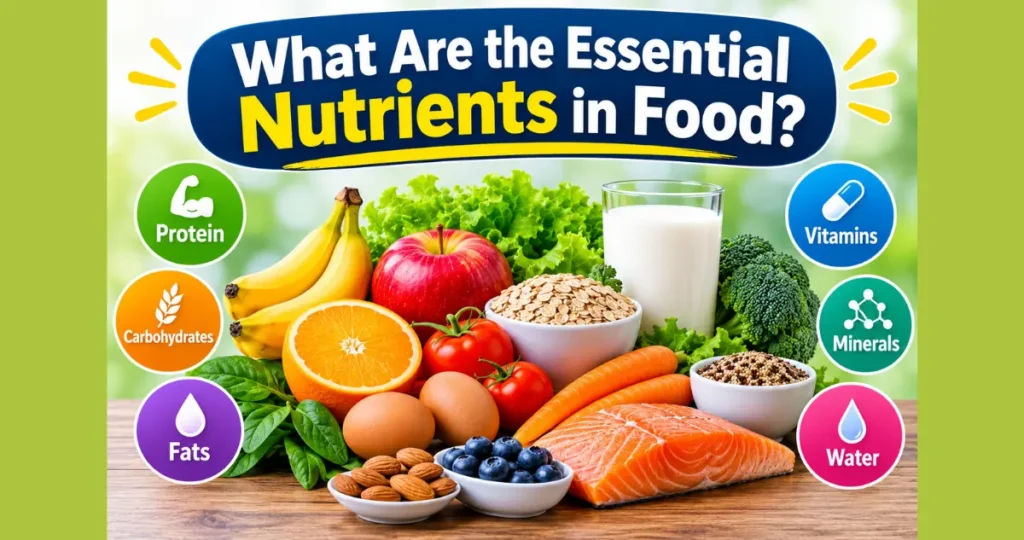
Nutrients are substances in food that the body needs for energy, growth, maintenance, and normal biological activities.
They are commonly divided into macronutrients and micronutrients according to the quantities required by the body.
1. Carbohydrates
Carbohydrates are an important source of energy. During digestion, many carbohydrates are broken down into simple sugars, which the body uses to produce energy.
Common sources include:
- Rice
- Wheat
- Bread
- Potatoes
- Fruits
- Oats
- Beans
Carbohydrates include sugars, starches, and dietary fibre. Whole grains, fruits, vegetables, and legumes provide carbohydrates along with other valuable nutrients.
2. Proteins
Proteins are essential for building and repairing body tissues. They are also involved in the production of enzymes, hormones, and other important biological substances.
Common sources include:
- Eggs
- Fish
- Chicken
- Milk
- Lentils
- Beans
- Soybeans
- Nuts
The body breaks dietary proteins into amino acids, which are used to maintain and develop different structures.
3. Fats
Fats provide energy, support cell structure, protect organs, and help the body absorb vitamins A, D, E, and K.
Common sources include:
- Olive oil
- Sunflower oil
- Nuts
- Seeds
- Avocados
- Fish
- Dairy products
Dietary fats include saturated and unsaturated fats. Unsaturated fats are found in foods such as nuts, seeds, fish, and many plant oils. Industrially produced trans fats should be avoided.
The WHO healthy diet guidance explains why the type and quantity of fat in a diet matter.
4. Vitamins
Vitamins are organic compounds required in small quantities for normal growth, development, and body functions.
The main vitamins include:
- Vitamin A: Supports vision and immune function.
- Vitamin B complex: Helps with energy metabolism and other cellular processes.
- Vitamin C: Supports collagen formation and normal immune function.
- Vitamin D: Helps the body absorb calcium and maintain bone health.
- Vitamin E: Functions as an antioxidant.
- Vitamin K: Supports normal blood clotting.
Fruits, vegetables, dairy products, eggs, fish, and fortified foods provide different vitamins.
5. Minerals
Minerals are inorganic nutrients that help maintain bones, muscles, blood, and other body systems.
Important minerals include:
- Calcium: Supports bones and teeth.
- Iron: Helps produce haemoglobin.
- Potassium: Supports normal muscle and nerve functions.
- Zinc: Supports immune function and tissue repair.
- Iodine: Helps produce thyroid hormones.
- Magnesium: Participates in many enzyme-related processes.
Different foods provide different minerals. For example, dairy products can supply calcium, meat and legumes provide iron, and nuts and seeds contain magnesium.
6. Water
Water is essential for life and is an important component of normal nutrition. It helps regulate body temperature, transport nutrients, support digestion, and remove waste products.
Humans obtain water through drinking water, beverages, and foods such as fruits and vegetables.
Although water does not provide calories, it is necessary for maintaining normal body functions.
For further information about nutrients and healthy eating, readers can consult MedlinePlus Nutrition, a health information resource provided by the US National Library of Medicine.
What Are the Five Main Food Groups?
Food groups organize different foods according to their nutritional characteristics. One widely used educational model is the USDA MyPlate system, which identifies five main groups.
These groups help people understand how to include a variety of foods in their meals.
1. Fruits
Fruits provide vitamins, minerals, dietary fibre, and natural sugars.
Examples include apples, oranges, bananas, grapes, mangoes, berries, and melons.
Fresh, frozen, and canned fruits can all contribute to a varied diet. However, products with added sugars should be considered carefully.
2. Vegetables
Vegetables provide dietary fibre, vitamins, minerals, and beneficial plant compounds.
Examples include:
- Spinach
- Broccoli
- Carrots
- Cabbage
- Tomatoes
- Cauliflower
- Peppers
Different vegetables contain different nutrients, so consuming a variety of colours and types can improve dietary diversity.
3. Grains
Grains are important sources of carbohydrates and may also provide fibre, vitamins, and minerals.
Examples include:
- Wheat
- Rice
- Oats
- Barley
- Corn
- Millet
Whole grains retain the bran, germ, and endosperm, while refined grains have some of these components removed during processing. Whole grains generally provide more dietary fibre than refined alternatives.
4. Protein Foods
This group includes animal and plant-based foods that provide protein.
Examples include:
- Fish
- Chicken
- Eggs
- Lean meat
- Beans
- Lentils
- Peas
- Nuts
- Seeds
- Soy products
Combining different protein sources can help provide the amino acids and other nutrients needed by the body.
5. Dairy and Fortified Alternatives
This group includes milk, yogurt, cheese, and suitable fortified alternatives.
These products can provide calcium, protein, vitamin D, and other nutrients, depending on their composition and fortification.
The USDA MyPlate food group guidance provides additional information about these groups and their role in meal planning.
What Is the Importance of Food in Human Life
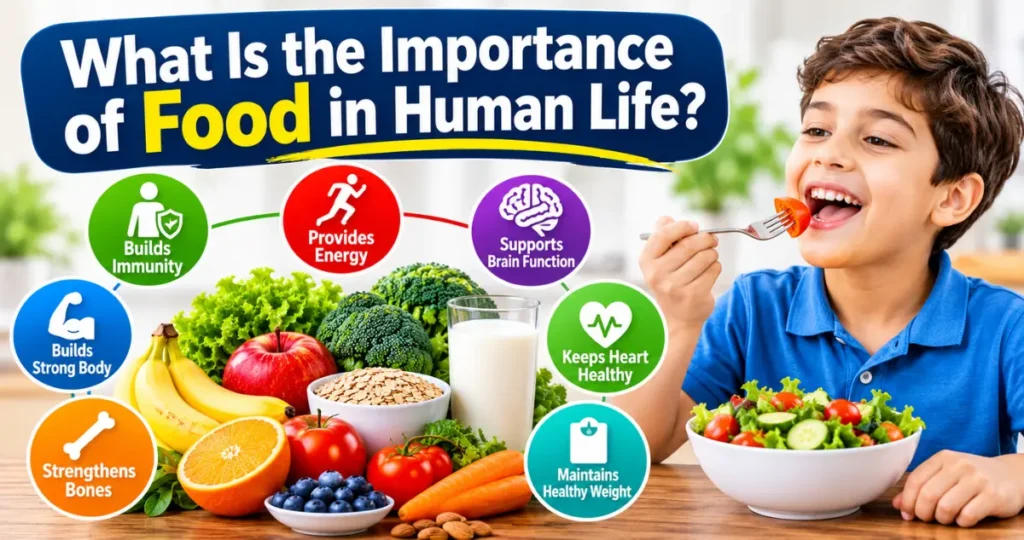
Food is essential for survival and supports nearly every activity performed by the human body. Its importance extends beyond providing calories because different nutrients perform specific roles in maintaining health and development.
1. Provides Energy
The human body requires energy to walk, work, study, exercise, breathe, and maintain normal biological functions.
Carbohydrates and fats are major dietary energy sources, while proteins can also contribute energy when needed.
Without sufficient energy from food, the body may struggle to maintain normal physical and metabolic activities.
2. Supports Growth and Development
Food provides nutrients needed for physical growth, particularly during childhood and adolescence.
Proteins, calcium, phosphorus, vitamins, and other nutrients contribute to the development of bones, muscles, and body tissues.
Adequate nutrition is also important during pregnancy and other stages of life when nutritional requirements may change.
3. Helps Repair Body Tissues
The body continuously replaces damaged or worn-out cells and tissues.
Proteins, vitamins, minerals, and other nutrients participate in tissue maintenance and repair.
For example, amino acids obtained from protein-rich foods are used to build and maintain muscles and other body structures.
4. Supports the Immune System
The immune system protects the body against harmful microorganisms and other external threats.
Nutrients such as vitamins A, C, and D, along with zinc, iron, and protein, support normal immune function.
Eating a varied diet helps provide the nutrients needed for these biological processes.
5. Maintains Bone and Muscle Health
Calcium, phosphorus, vitamin D, protein, and magnesium contribute to normal bone and muscle functions.
Milk, yogurt, leafy vegetables, legumes, nuts, seeds, fish, and fortified foods can provide some of these nutrients.
Physical activity and appropriate nutrition both contribute to maintaining strong bones and healthy muscles.
6. Supports Brain Function
The brain requires a continuous supply of energy and nutrients to perform its functions.
Food provides glucose, fatty acids, vitamins, minerals, and other compounds that participate in brain development and normal neurological activities.
A varied and balanced diet supports overall health, including brain function.
7. Supports Digestive Health
Dietary fibre found in fruits, vegetables, whole grains, legumes, nuts, and seeds helps maintain normal digestive function.
Fibre contributes to bowel regularity and supports beneficial intestinal microorganisms.
Drinking adequate water and consuming a variety of fibre-containing foods can also support digestive health.
8. Maintains Overall Well-Being
A nutritious diet supports physical activity, normal metabolism, and general health.
According to the World Health Organization, healthy dietary patterns help protect against different forms of malnutrition and reduce the risk of several noncommunicable diseases.
What Is the Difference Between Natural and Processed Food?
Food can also be classified according to how much processing it undergoes before consumption.
Understanding these differences helps consumers evaluate food ingredients, preparation methods, and nutritional quality.
Natural or Minimally Processed Foods
These foods are consumed in their natural form or undergo limited processing, such as washing, cutting, drying, freezing, or refrigeration.
Examples include:
- Fresh fruits
- Vegetables
- Eggs
- Fresh fish
- Plain milk
- Whole grains
- Unsalted nuts
Minimal processing generally aims to preserve food while making it easier to store, transport, or prepare.
Processed Foods
Processed foods are made by adding ingredients such as salt, sugar, oil, or other substances to natural foods. Processing may also involve cooking, fermentation, preservation, or packaging.
Examples include:
- Cheese
- Canned vegetables
- Bread
- Salted nuts
- Yogurt
- Canned fish
Processing is not automatically harmful. Some methods improve food safety, extend shelf life, and make nutritious foods available throughout the year.
Highly Processed Foods
Some industrially formulated products contain multiple ingredients and may have high levels of added sugars, sodium, or unhealthy fats.
Examples can include certain packaged snacks, sugary drinks, confectionery, and instant food products.
Their nutritional quality varies, but frequently consuming products high in salt, free sugars, and unhealthy fats can make it more difficult to maintain a balanced diet.
The WHO guidance on healthy diets explains the importance of choosing a variety of minimally processed and unprocessed foods.
What Is the Difference Between Food and Nutrition?
Food and nutrition are closely related terms, but they do not have exactly the same meaning.
Food refers to substances consumed by living organisms, whereas nutrition describes the processes through which the body obtains, absorbs, and uses nutrients from food.
| Food | Nutrition |
|---|---|
| Refers to substances consumed for nourishment. | Refers to the processes of obtaining and using nutrients. |
| Includes fruits, vegetables, grains, and animal products. | Involves digestion, absorption, metabolism, and nutrient utilization. |
| Provides nutrients and energy. | Explains how the body uses nutrients. |
| Can be classified by source, type, and processing. | Can be studied through dietary requirements and physiological functions. |
For example, an apple is a food that provides carbohydrates, fibre, and vitamins. Nutrition explains how the body digests and uses these components.
Food science and nutrition are also related academic disciplines, but they have different areas of focus. Readers can learn more about the scientific study of food in Fullipedia’s article on What Is Food Science.
What Makes a Balanced and Healthy Diet?
A balanced diet includes different foods in suitable amounts to provide the nutrients and energy required by the body.
Nutritional requirements vary according to age, activity level, body composition, life stage, and other individual factors. Therefore, a balanced diet does not look exactly the same for everyone.
The following principles help explain the foundations of healthy eating.
1. Eat a Variety of Foods
Consuming different fruits, vegetables, grains, legumes, nuts, and protein sources helps provide a wider range of nutrients.
Relying on only a few foods may limit dietary diversity.
2. Include Whole Grains
Whole grains such as oats, brown rice, whole wheat, and millet provide carbohydrates, fibre, and other nutrients.
They can be included in different meals according to dietary preferences and availability.
3. Consume Fruits and Vegetables
Fruits and vegetables provide vitamins, minerals, fibre, and beneficial plant compounds.
The WHO recommends that people older than 10 years aim for at least 400 grams of fruits and vegetables per day.
4. Choose Suitable Protein Sources
Protein can come from eggs, fish, poultry, dairy products, beans, lentils, nuts, and soy products.
Including different sources can help support nutritional needs.
5. Limit Excessive Salt and Added Sugars
Regularly consuming excessive amounts of salt and free sugars can negatively affect health.
The WHO recommends limiting free sugars to less than 10% of total daily energy intake and adult salt intake to less than 5 grams per day.
6. Select Healthier Fat Sources
Unsaturated fats from nuts, seeds, fish, and vegetable oils can be included as part of a balanced diet.
It is also important to limit industrial trans fats and avoid excessive consumption of saturated fats.
7. Drink Enough Water
Water supports digestion, temperature regulation, circulation, and many other biological processes.
Individual water requirements vary according to climate, physical activity, age, and other factors.
What Is Food Safety and Why Is It Important?
Food safety refers to the practices and conditions used to ensure that food is suitable for consumption and does not cause harm when prepared or eaten as intended.
Unsafe food can contain harmful bacteria, viruses, parasites, chemicals, or other contaminants. These hazards may cause foodborne illnesses and can affect people of all ages.
Food safety is important during production, transportation, storage, preparation, cooking, and serving.
The US Food and Drug Administration and FoodSafety.gov explain four basic steps that consumers can follow to reduce food safety risks.
1. Clean
Wash hands, kitchen surfaces, utensils, and food preparation equipment regularly.
Fresh fruits and vegetables should be rinsed under running water before preparation. Raw meat, poultry, and eggs should not be washed because splashing water can spread harmful microorganisms.
2. Separate
Keep raw meat, poultry, seafood, and eggs separate from ready-to-eat foods.
Use separate cutting boards and utensils where appropriate to prevent cross-contamination.
3. Cook
Cook foods to safe internal temperatures. A food thermometer is a useful tool because the appearance and colour of food alone cannot reliably confirm that it is safely cooked.
4. Chill
Refrigerate perishable foods promptly. FoodSafety.gov recommends refrigerating perishable foods within two hours, or within one hour when the surrounding temperature exceeds 90°F (32°C).
For additional instructions, read the official FoodSafety.gov Four Steps to Food Safety guide and the FDA Safe Food Handling recommendations.
What Are the Different Ways Food Is Prepared and Preserved?
Food preparation and preservation methods help make food suitable for consumption, improve its taste, and extend its usable life.
Different methods are used according to food type, storage requirements, and cultural practices.
1. Cooking
Cooking uses heat to prepare food and improve its taste, texture, and digestibility.
Common cooking methods include boiling, steaming, baking, roasting, frying, and grilling.
2. Refrigeration
Refrigeration uses low temperatures to slow the growth of many microorganisms and help preserve perishable foods.
Milk, vegetables, cooked meals, meat, and other perishable products often require refrigeration.
3. Freezing
Freezing stores food at very low temperatures to slow microbial growth and preserve food for longer periods.
Frozen fruits, vegetables, meat, fish, and prepared meals are common examples.
4. Drying
Drying removes moisture from food, making conditions less suitable for the growth of many microorganisms.
Examples include dried fruits, raisins, dried herbs, grains, and certain preserved vegetables.
5. Canning
Canning involves placing food in suitable containers and applying controlled processing methods to make products shelf-stable.
Examples include canned beans, vegetables, fruits, and fish.
6. Fermentation
Fermentation uses microorganisms to transform food components, producing changes in flavour, texture, and preservation characteristics.
Examples include yogurt, cheese, bread, kimchi, and fermented vegetables.
Food preservation is an important part of food science and food technology. It helps reduce spoilage, improve availability, and support the distribution of food over long distances.
What Is the Role of Food in Culture and Society?
Food has an important place in human culture and social life. Different communities develop their own eating habits, cooking methods, recipes, and traditional dishes according to local ingredients and historical influences.
For example, rice and lentils are common components of many South Asian meals, while bread, pasta, potatoes, and other grains play important roles in different European and American food traditions.
Food also brings people together during weddings, festivals, religious celebrations, and family gatherings.
Traditional cooking methods and recipes are often passed from one generation to another. These practices preserve cultural identity and help communities maintain connections with their history.
Food also supports employment and economic development. Farmers, food processors, manufacturers, distributors, restaurant owners, retailers, and other professionals contribute to the food supply chain.
Therefore, food is not only necessary for physical survival but also contributes to social relationships, cultural heritage, and economic activity.
What Is the Role of Food Science in Modern Food Production?
Food science is the scientific study of food composition, properties, processing, preservation, safety, and quality.
It combines knowledge from chemistry, biology, microbiology, engineering, and nutrition to understand how food behaves during production, storage, and preparation.
Food scientists work to improve food quality, develop new products, reduce spoilage, and maintain safety standards.
Some important areas of food science include:
- Food chemistry
- Food microbiology
- Food processing
- Food preservation
- Food packaging
- Food quality control
- Sensory evaluation
For example, food scientists study how heat affects milk during pasteurization, how microorganisms influence fermentation, and how packaging materials protect food during transportation.
These activities help manufacturers produce consistent food products and maintain quality throughout the supply chain.
Fullipedia also provides technical references for readers interested in food-related terminology. Explore Food Science Initialisms Alphabet N and Food Science Initialisms Alphabet S to learn about relevant scientific and technical terms.
Frequently Asked Questions About Food
1. What is food in simple words?
Food is any substance consumed by living organisms to obtain nutrients and energy. It supports growth, tissue repair, body functions, and survival.
2. What are the main types of food?
Common educational classifications include energy-giving foods, body-building foods, and protective foods. Food can also be grouped according to its source, nutritional composition, and processing level.
3. What are the five main food groups?
The five commonly recognized groups in the USDA MyPlate model are fruits, vegetables, grains, protein foods, and dairy.
4. What are the main sources of food?
The main sources include plants, animals, aquatic organisms, fungi, and food products made through processing and manufacturing.
5. What are the six essential nutrients?
The six commonly recognized classes of essential nutrients are carbohydrates, proteins, fats, vitamins, minerals, and water.
6. Why is food important for human survival?
Food supplies energy and nutrients required for growth, tissue repair, metabolism, immune function, and normal body activities.
7. What is the difference between food and nutrients?
Food refers to substances consumed for nourishment, while nutrients are the individual components of food that the body uses for energy, growth, and other biological functions.
8. What is the difference between food and nutrition?
Food is what people consume, whereas nutrition refers to how the body obtains and uses nutrients through digestion, absorption, and metabolism.
9. Are all processed foods unhealthy?
No. Processing includes useful methods such as freezing, pasteurization, drying, and fermentation. The nutritional quality of processed foods depends on their ingredients and preparation methods.
10. What is food safety?

Food safety involves practices that prevent contamination and reduce the risk of foodborne illnesses during food production, storage, preparation, and consumption.
Conclusion
Food is an essential part of human life because it provides energy, nutrients, and materials needed for growth, development, and normal body functions. Its sources include plants, animals, aquatic organisms, and other natural materials. Different foods supply carbohydrates, proteins, fats, vitamins, minerals, and water, which perform important roles in maintaining health.
Understanding the types of food, their nutritional value, and their importance helps people make informed dietary choices. A balanced diet should include a variety of nutritious foods while considering individual requirements, cultural preferences, and food availability. Safe preparation, proper storage, and hygienic handling are equally important for preventing foodborne illnesses.
Food also contributes to culture, agriculture, industry, and economic development. Through food science, modern production and preservation methods continue to improve food quality, availability, and safety. Overall, food is much more than a basic requirement for survival; it is a foundation of human health, society, and everyday life.