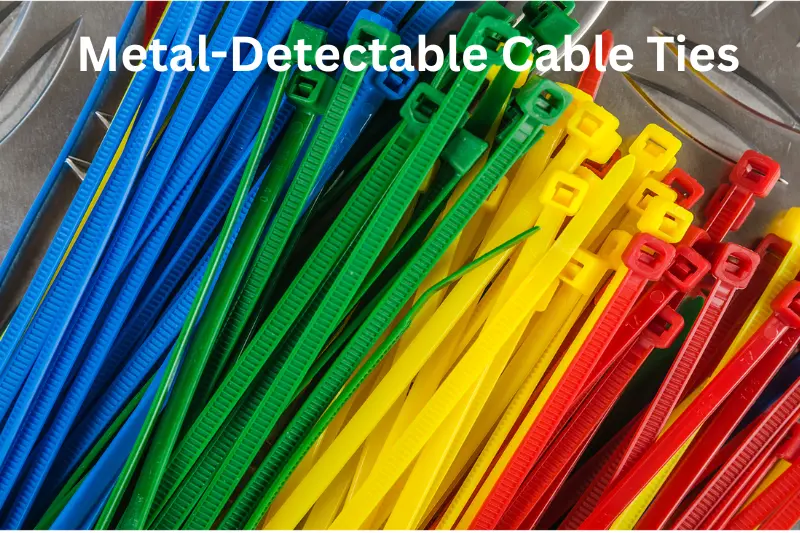

Contamination control is no longer a “nice to have” in regulated manufacturing environments — it’s a legal, financial, and reputational necessity. From food processing lines to pharmaceutical cleanrooms, every component that touches a product or comes near it is now scrutinized for contamination risk. One item that often gets overlooked in this conversation is something as small and unglamorous as a cable tie.
Yet standard nylon cable ties, when they break or fragment inside machinery, can become one of the most dangerous and hardest-to-detect foreign objects in a production line. This is exactly the gap that metal detectable cable ties were engineered to close.
The Hidden Risk of Ordinary Cable Ties
Cable ties are everywhere in industrial settings — bundling wires, securing hoses, holding sensors in place, organizing conveyor systems. In a typical facility, thousands of them are in use at any given time. They’re cheap, disposable, and easy to forget about.
The problem is that standard cable ties are made from unmodified nylon (usually nylon 6/6). If one snaps, gets brittle from heat or UV exposure, or is accidentally left behind after maintenance, a fragment can end up:
- Falling directly into a food product on a conveyor belt
- Getting mixed into raw ingredients during processing
- Ending up inside pharmaceutical mixing equipment
- Contaminating packaging lines
Because standard nylon is not detectable by X-ray or metal detection equipment, these fragments pass through quality control completely unnoticed. The first time anyone finds out is when a customer bites into something they shouldn’t have, or worse, a regulatory audit turns up the issue after the product has already shipped.
What Makes a Cable Tie “Metal Detectable”
Metal detectable cable ties solve this problem through a simple but effective change in material composition. Instead of standard nylon, they’re manufactured using a nylon compound embedded with ferrous or stainless steel particles distributed evenly throughout the material — not just on the surface.
This embedded metal content means that if a tie breaks or a fragment enters the product stream, it can be picked up by:
- Metal detectors already installed on most food and pharma production lines
- X-ray inspection systems used for foreign object detection
- Some models are also detectable by frequency-based checkweigher/detector combinations used in packaging
Because the detection additive is mixed through the entire tie rather than coated on, even a small broken fragment retains enough metal content to trigger standard detection equipment. This is the critical difference between a tie that’s “colored for visibility” and one that’s genuinely engineered for detectability.
Why the Food Industry Relies on Them
Food safety systems like HACCP (Hazard Analysis and Critical Control Points), BRC, and SQF all require manufacturers to identify and control physical contamination hazards. Foreign object contamination is consistently one of the top reasons for product recalls worldwide, and plastic fragments are among the most common culprits because they’re lightweight, small, and don’t show up on standard metal-only detection systems unless specifically engineered to.
Common use cases in food manufacturing include:
- Securing wiring and hoses on conveyor systems near open product zones
- Bundling cables inside mixers, blenders, and packaging machinery
- Organizing sensor wiring on filling and sealing lines
- Holding tags, labels, or signage in direct-contact zones
Facilities that switch to metal detectable ties in these zones are effectively closing a contamination loophole that’s easy to miss during a standard risk assessment, since most audits focus heavily on ingredients and less on ancillary hardware like fasteners and ties.
Why Pharmaceutical Manufacturers Use Them Too
Pharmaceutical manufacturing operates under even tighter tolerances than food production. Good Manufacturing Practice (GMP) guidelines require strict control over any material that could contaminate a batch, and unlike food, pharmaceutical contamination can go undetected for much longer since products aren’t always visually inspected piece by piece the way food sometimes is.
In pharma settings, metal detectable ties are typically used for:
- Cleanroom equipment wiring and hose management
- Tamper-evident bundling during in-process handling
- Equipment maintenance where broken standard ties have previously caused unplanned downtime for foreign object investigations
- Mixing and tableting equipment where any foreign fragment could compromise an entire batch
Because pharmaceutical recalls tied to foreign object contamination are extraordinarily costly — both in regulatory penalties and lost trust — many manufacturers now specify metal detectable ties as a standard requirement in their approved vendor lists for MRO (maintenance, repair, and operations) supplies.
Color-Coding as a Secondary Safety Layer
Most metal detectable cable ties are manufactured in blue, a color deliberately chosen because it does not naturally occur in most food or pharmaceutical products. This makes any tie or fragment immediately visible to the human eye during visual inspection, acting as a first line of defense even before a fragment would need to be caught electronically.
This combination — visual distinctiveness plus electronic detectability — is why blue metal detectable ties have essentially become an industry-standard color in contamination-controlled environments, similar to how blue bandages and blue gloves are used in food handling for the same reason.
Material and Performance Considerations
Beyond detectability, manufacturers still need cable ties that perform reliably under real operating conditions. Reputable suppliers manufacture metal detectable ties that maintain:
- Comparable tensile strength to standard nylon ties, despite the embedded additive
- Resistance to a wide range of operating temperatures found in processing and sterilization environments
- UV and chemical resistance for facilities using regular washdown or sanitization cycles
- A range of sizes suitable for everything from light cable bundling to heavier-duty securing tasks
This matters because switching to a detectable tie should never mean compromising on mechanical performance. A tie that’s detectable but breaks prematurely just creates more fragments to detect in the first place.
Choosing the Right Supplier
Not all “metal detectable” ties on the market are manufactured to the same standard. Some manufacturers only surface-treat their ties, which significantly reduces detectability once a tie fragments, since the broken piece may no longer contain the metal content at all. When evaluating suppliers, food and pharma procurement teams should ask about:
- Whether the metal content is compounded throughout the material or applied as a coating
- Detection reliability at various fragment sizes, not just for a whole, intact tie
- Certifications or test data supporting detectability claims
- Consistency of manufacturing across production batches
This is one of the areas where working with an established, quality-focused manufacturer makes a measurable difference. Companies like Shangbo Plastic have built their production processes specifically around these contamination-control requirements, offering metal detectable cable ties designed for consistent detectability, verified material composition, and mechanical performance that holds up in demanding industrial environments.
Making the Switch
For facilities that haven’t yet audited their use of standard cable ties in contamination-sensitive zones, a simple starting point is a walk-through of any area where products or ingredients are exposed, and cataloging every zone where a cable tie is currently in use. From there, transitioning to metal detectable versions in those specific zones — rather than an entire facility-wide swap — is often the most practical and cost-effective first step.
As food safety and pharmaceutical regulations continue to tighten globally, foreign object contamination controls are only going to become more rigorous, not less. Cable ties may be a small, inexpensive component, but in a regulated production environment, they represent an outsized risk if left unaddressed. Making the switch to metal detectable versions is a low-cost, high-impact way to close one more gap in a facility’s contamination control program.