
Introduction
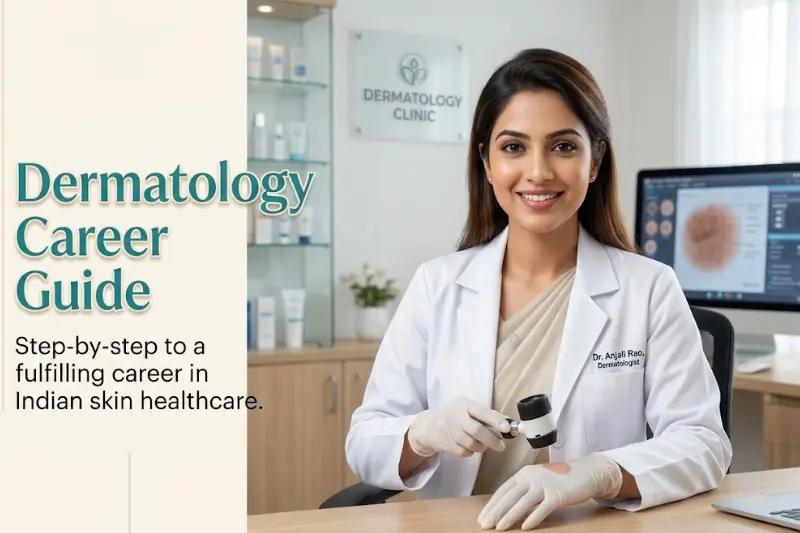
Choosing a medical specialty is a major career decision for an MBBS graduate. Students who enjoy clinical diagnosis, patient interaction, skin diseases, procedures, and outpatient care often consider dermatology. This Dermatology Career Guide explains what dermatology involves, how to enter the specialty, what dermatologists do, career opportunities, work environment, earning factors, required skills, advantages, challenges, and future prospects.
Dermatology is a medical specialty concerned with diseases and conditions affecting the skin, hair, nails, and related structures. Dermatologists manage a wide range of medical problems, including acne, eczema, psoriasis, infections, pigmentation disorders, hair loss, nail disorders, allergic skin conditions, and skin cancers. The specialty can also include procedural and aesthetic dermatology within appropriate training, qualifications, and professional regulations. The American Academy of Dermatology describes dermatologists as medical doctors specializing in conditions involving the skin, hair, and nails. <a href=”https://www.aad.org/public/fad/what-is-a-derm“>What is a dermatologist?</a>
For Indian medical students, a Dermatology Career Guide is particularly useful because dermatology sits within the recognized postgraduate medical education framework. The National Medical Commission lists MD Dermatology, Venereology and Leprosy among recognized postgraduate broad-specialty qualifications.
What Is Dermatology?
Dermatology is the branch of medicine focused on diagnosing, treating, and preventing diseases of the skin, hair, and nails. Dermatologists also evaluate certain conditions that affect mucous membranes and may identify skin manifestations associated with systemic diseases.
The specialty involves much more than cosmetic skincare. A dermatologist may diagnose inflammatory skin disease, infections, autoimmune conditions, pigmentary disorders, hair disorders, nail disorders, drug reactions, and skin cancers.
A dermatologist can work with patients of different ages. Some cases are straightforward outpatient problems, while others require detailed investigations, biopsies, procedures, multidisciplinary care, or long-term follow-up.
A strong Dermatology Career Guide must separate medical dermatology from the popular perception that dermatology is primarily about cosmetic treatments. Medical knowledge, diagnostic accuracy, clinical examination, patient communication, and evidence-based treatment remain central to the specialty.
What Does a Dermatologist Do?
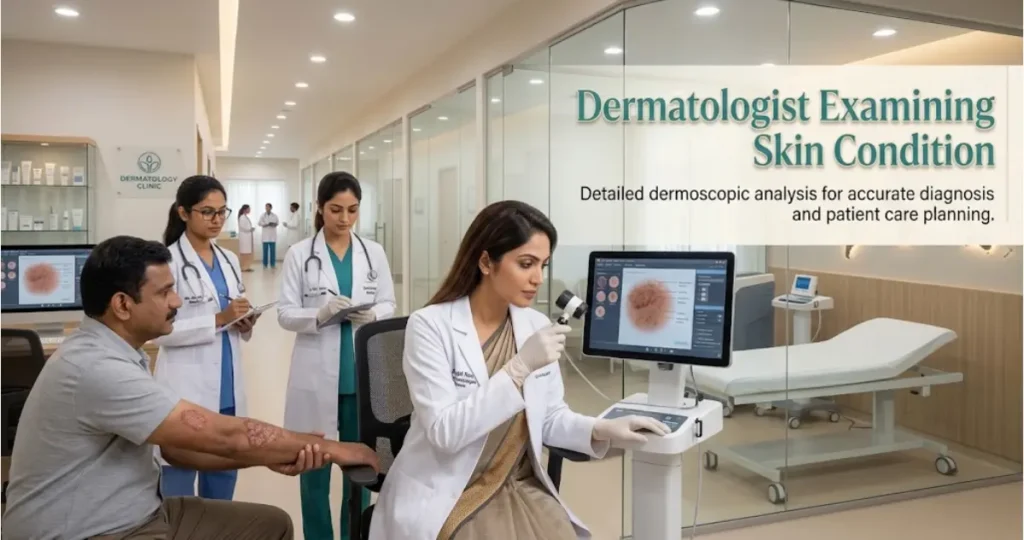
A dermatologist assesses patients with skin, hair, and nail concerns and develops an appropriate management plan.
Typical responsibilities can include:
- Taking a detailed medical history
- Performing skin examinations
- Diagnosing dermatological conditions
- Prescribing appropriate treatments
- Monitoring chronic skin conditions
- Performing selected procedures
- Evaluating suspicious skin lesions
- Managing hair and nail disorders
- Counseling patients about treatment and prevention
- Referring patients when another specialty is required
- Maintaining accurate clinical records
- Continuing professional education
Dermatologists can also manage conditions that have connections with other medical systems. A skin finding can sometimes provide clues about an underlying systemic or autoimmune disorder. The dermatologist’s role can include recognizing such findings and coordinating appropriate specialist evaluation.
The American Academy of Dermatology notes that dermatologists are trained to diagnose and treat thousands of diseases involving the skin, hair, and nails.
Dermatology Career Path After MBBS
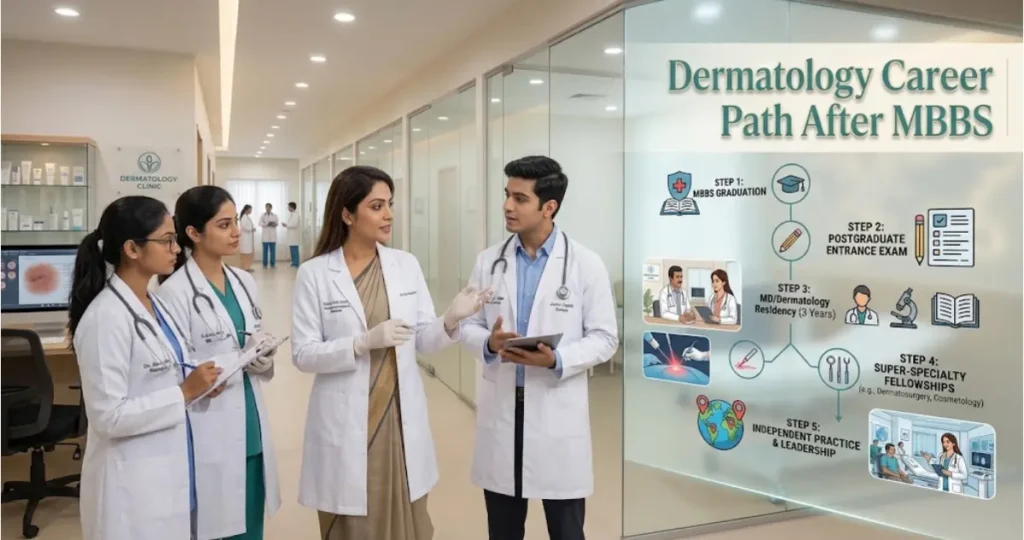
For an Indian medical graduate, the typical pathway involves completing MBBS and then pursuing recognized postgraduate training according to the applicable admission and regulatory framework.
A simplified career pathway is:
MBBS → Postgraduate Medical Admission → MD Dermatology, Venereology and Leprosy → Dermatology Practice
The exact admission requirements, counseling process, seat availability, and regulations should be verified for the relevant academic year. The National Medical Commission maintains the current postgraduate medical education regulations and related standards.
Students who are still comparing postgraduate options can also read Medical Specialization After MBBS in India, which covers the broader specialization pathway.
A student should not select dermatology only because of perceived income or lifestyle. Internship exposure, clinical interest, aptitude, postgraduate training quality, and long-term professional goals deserve consideration.
MD Dermatology, Venereology and Leprosy
In India, the recognized postgraduate specialty is MD Dermatology, Venereology and Leprosy. The specialty provides structured postgraduate education in dermatological diseases and related clinical areas.
The National Medical Commission’s postgraduate regulations include MD Dermatology, Venereology and Leprosy among recognized MD broad specialties.
Training develops knowledge and practical competence in areas such as:
- Medical dermatology
- Dermatological infections
- Inflammatory skin disorders
- Autoimmune skin disease
- Hair disorders
- Nail disorders
- Pigmentary disorders
- Sexually transmitted infections within the specialty’s scope
- Leprosy
- Skin tumors and cancers
- Dermatological procedures
- Clinical diagnosis and patient management
The exact curriculum, institutional exposure, training requirements, and regulatory standards should be checked against current official NMC information.
Eligibility for a Dermatology Career in India
Students interested in a Dermatology Career Guide should understand that postgraduate specialization comes after undergraduate medical education.
An MBBS qualification and the applicable postgraduate admission eligibility are important components of the pathway. Admission depends on the rules applicable during the relevant academic year.
Students should verify:
- MBBS qualification requirements
- Internship completion requirements
- Registration requirements
- Postgraduate entrance requirements
- Counseling rules
- Seat availability
- Institutional eligibility
- Current NMC regulations
The National Medical Commission maintains official postgraduate medical education regulations and standards, which can change through amendments and notices.
This makes official regulatory information more reliable than relying on old admission articles or social media posts.
What Skills Are Important for Dermatology?
A successful Dermatology Career Guide should include the practical skills required for the specialty.
Clinical Observation
Dermatology is strongly dependent on clinical examination. The appearance, distribution, texture, color, and pattern of a lesion can provide important diagnostic information.
Diagnostic Reasoning
Different diseases can produce similar-looking symptoms. A dermatologist needs to develop differential diagnoses and determine when further testing is necessary.
Patient Communication
Skin conditions can affect confidence, social interaction, appearance, and emotional well-being. Clear communication helps patients understand diagnosis, treatment expectations, and follow-up requirements.
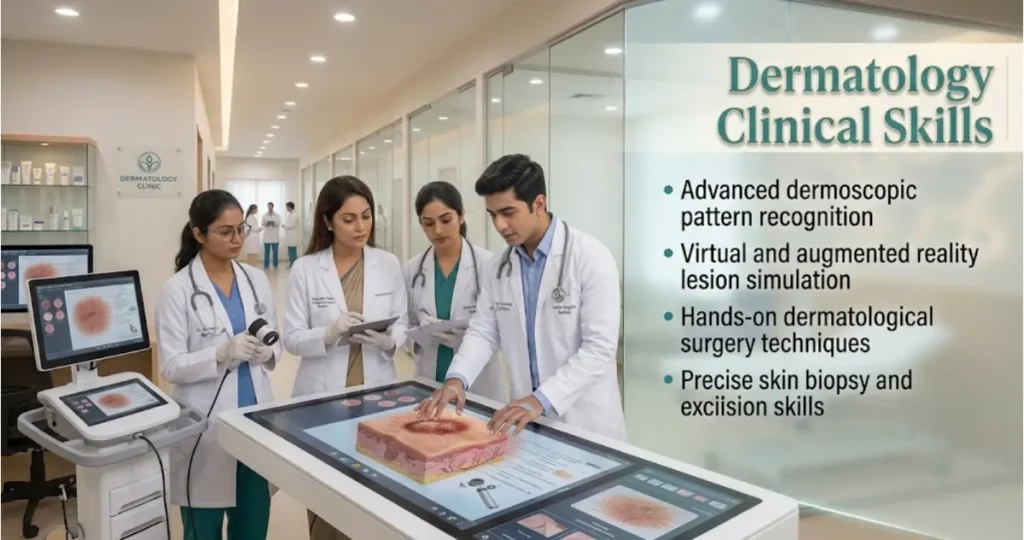
Procedural Skills
Some dermatology practices involve procedures. The exact procedures performed depend on training, qualifications, practice setting, and applicable professional requirements.
Attention to Detail
Small changes in lesions, pigmentation, morphology, or distribution can have clinical significance. Careful examination is an important professional skill.
Continuous Learning
Dermatology changes with advances in pharmacology, biologic therapies, procedural techniques, diagnostic methods, and evidence-based medicine. Continuous education remains important throughout a dermatologist’s career.
Areas of Dermatology Practice
Dermatology offers several professional directions.
Medical Dermatology
Medical dermatology focuses on diagnosing and managing diseases of the skin, hair, and nails.
Common examples include:
- Acne
- Eczema
- Psoriasis
- Urticaria
- Fungal infections
- Bacterial skin infections
- Viral skin infections
- Vitiligo
- Pigmentation disorders
- Hair loss
- Nail disorders
The specific cases encountered depend on the practice environment and patient population.
Cosmetic and Aesthetic Dermatology
Some dermatologists develop careers involving aesthetic concerns and procedures. Depending on appropriate training and professional regulations, these may include selected laser-based procedures, scar management, and other dermatological procedures.
Cosmetic dermatology should not be confused with unqualified cosmetic practice. Medical assessment remains important because an apparently cosmetic skin problem can sometimes represent an underlying disease.
Pediatric Dermatology
Children can develop dermatological conditions requiring age-specific diagnosis and treatment. A dermatologist may work with pediatric patients alongside pediatricians and other specialists.
Dermatologic Surgery
Some dermatologists perform procedures and surgical treatments within their training and scope of practice. Procedural dermatology can include lesion removal, biopsy-related procedures, and other interventions depending on expertise and qualifications.
Skin Cancer Care
Dermatologists can play an important role in identifying suspicious skin lesions and managing dermatological conditions associated with skin cancer. Some professionals pursue additional training in specialized areas of skin cancer diagnosis or treatment.
Dermatology Career Opportunities in India
A major reason students research a Dermatology Career Guide is the variety of possible professional settings.
A dermatologist may work in:
- Government hospitals
- Private hospitals
- Dermatology clinics
- Multispecialty hospitals
- Academic institutions
- Medical colleges
- Research organizations
- Corporate healthcare
- Private practice
- Specialized dermatology centers
Career development can follow different directions. One dermatologist may prefer hospital-based clinical work, while another may build a private outpatient practice. A third may focus on academic medicine, teaching, research, or a procedural subspecialty.
The career model depends on qualifications, experience, location, professional reputation, clinical interests, available infrastructure, and patient demand.
Students comparing dermatology with other specialties can also explore Best MD Branches After MBBS in India.
Dermatology Private Practice Career
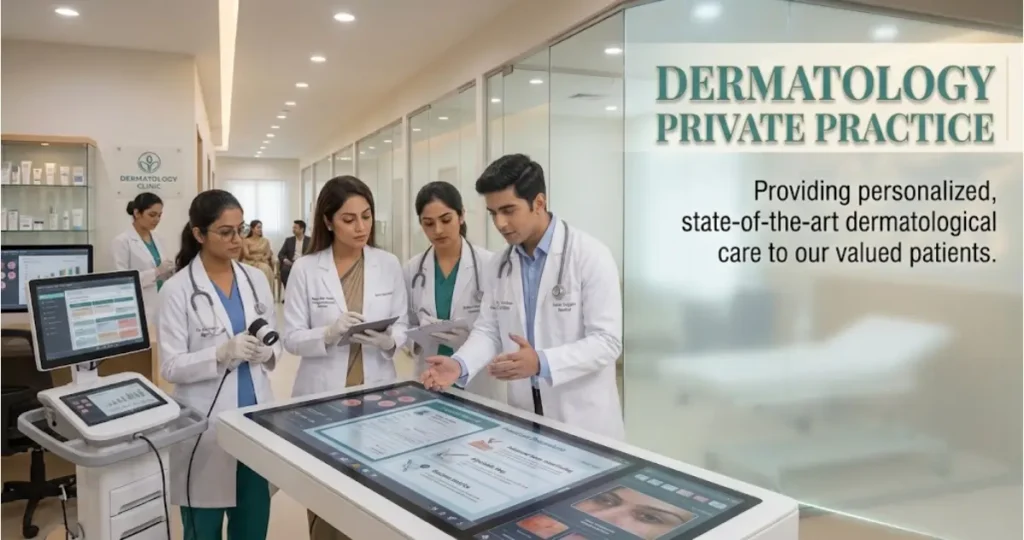
Private practice is one of the career paths frequently considered in a Dermatology Career Guide.
Dermatology can be suitable for outpatient-based practice because many patients can be evaluated through scheduled consultations. A private dermatologist may provide medical consultations, follow-up care, selected procedures, and other services within professional qualifications.
Private practice success is not guaranteed by specialty alone.
Important factors include:
- Clinical competence
- Location
- Patient trust
- Ethical practice
- Professional reputation
- Communication skills
- Quality of facilities
- Appropriate technology
- Patient experience
- Continuing education
A newly qualified dermatologist may have a different professional trajectory from an experienced dermatologist with an established practice.
Dermatology Career and Work Environment
Dermatology is commonly associated with outpatient medicine. Many consultations take place in clinics rather than intensive-care environments.
This can appeal to students who prefer:
- Planned consultations
- Detailed patient examination
- Long-term follow-up
- Clinical diagnosis
- Procedure-based outpatient care
- Less routine exposure to major emergencies
This does not mean every dermatology job has identical working hours. Hospital responsibilities, emergency services, patient volume, procedures, administrative duties, and practice ownership can affect workload.
Fullipedia’s existing article on Dermatology and Medical Branch Work-Life Balance discusses lifestyle considerations across specialties. The article also notes that work-life balance depends on hospital, location, workload, seniority, and practice model.
Dermatology Salary in India
Salary is one of the most searched aspects of a Dermatology Career Guide, but a single national salary figure would be misleading.
Dermatologist income can vary according to:
- Experience
- City
- Government or private employment
- Hospital type
- Clinic ownership
- Patient volume
- Procedures offered
- Professional reputation
- Additional training
- Academic responsibilities
- Working hours
A junior dermatologist employed by a hospital may have a very different income from an experienced dermatologist running an established private practice.
Income from private practice can also fluctuate because it depends on patient volume, operating costs, location, services, and professional demand.
Students should avoid choosing dermatology solely because of expected earnings.
The same principle applies when comparing dermatology with other specialties. For example, Fullipedia’s Cardiology Salary in India guide demonstrates how specialist income can vary substantially according to experience, setting, subspecialty, and practice model.
Is Dermatology a Good Career After MBBS?
Dermatology can be a strong career choice for an MBBS graduate who genuinely enjoys the specialty.
It may suit students who enjoy:
- Clinical diagnosis
- Skin and hair disorders
- Patient consultations
- Visual examination
- Long-term patient relationships
- Outpatient medicine
- Selected procedures
- Continuous learning
- Medical and aesthetic dermatology
The specialty may be less suitable for students who strongly prefer major operative surgery, trauma care, intensive emergency medicine, or highly acute inpatient environments.
A Dermatology Career Guide should not describe one specialty as universally better than another. The best branch depends on the type of professional work a doctor wants to perform.
Students can compare dermatology with other branches using How to Choose a Medical Branch.
Advantages of a Dermatology Career
Strong Clinical Focus
Dermatology requires careful clinical assessment and diagnostic reasoning.
Outpatient Opportunities
Many dermatological conditions can be managed through outpatient consultations and follow-up.
Multiple Career Models
Doctors can work in hospitals, clinics, academic institutions, research, and private practice.
Procedural Opportunities
Appropriately trained dermatologists can develop procedural skills within their qualifications and professional scope.
Long-Term Patient Relationships
Many chronic skin conditions require monitoring and repeated consultations.
Scope for Further Development
Dermatologists can continue developing expertise in areas such as procedural dermatology, pediatric dermatology, dermatologic surgery, skin cancer care, research, or academic medicine.
Challenges in a Dermatology Career
Every Dermatology Career Guide should also discuss the challenges.
Competitive Postgraduate Entry
Dermatology can be highly competitive, making postgraduate admission difficult for many students.
Diagnostic Complexity
Skin conditions can look similar, and accurate diagnosis may require considerable clinical experience.
Patient Expectations
Patients may expect immediate improvement from chronic skin conditions. Dermatologists need to explain realistic treatment timelines.
Cosmetic Pressure
The aesthetic side of dermatology can create commercial pressure. Ethical clinical decision-making should remain central.
Continuous Learning
New treatments, technologies, medications, procedures, and clinical evidence require ongoing professional education.
Business Responsibilities
Dermatologists running private practices may need to manage staffing, equipment, finances, appointments, compliance, and patient communication in addition to clinical duties.
Dermatology vs Other Medical Branches
Students should compare specialties according to actual work rather than popularity.
Dermatology generally emphasizes skin, hair, nail, and related conditions.
General Medicine focuses on broad adult medical conditions. Students interested in that pathway can read General Medicine vs General Physician.
Radiology emphasizes diagnostic imaging and technology. Fullipedia’s Radiology Scope in India guide can help students compare another technology-oriented specialty.
Surgical branches involve operative treatment and procedural care.
Psychiatry focuses on mental and behavioral health.
Pediatrics focuses on the health and medical care of children.
The right specialty depends on the type of patient care and professional environment that matches the doctor’s interests and strengths.
Dermatology Career Guide for Students Choosing a Specialty
Students can use a structured approach before selecting dermatology.
Review Internship Experience
Think about the departments that genuinely held your interest during clinical rotations.
Observe the Actual Work
Read about dermatology, but also observe what dermatologists do in real clinical settings.
Compare Patient Interaction
Consider whether you enjoy repeated outpatient consultations and detailed patient examination.
Evaluate Procedural Interest
Decide whether you are interested in procedures as part of dermatological practice.
Consider Long-Term Career Goals
Think about hospital employment, private practice, academics, research, or a combination.
Check Current Admission Rules
Use current official regulatory and counseling information instead of relying on outdated admission information.
Compare Training Institutions
Clinical exposure, faculty, patient volume, procedures, academic environment, and facilities can influence postgraduate training.
Future Scope of Dermatology
The future of a Dermatology Career Guide extends beyond conventional skin consultations.
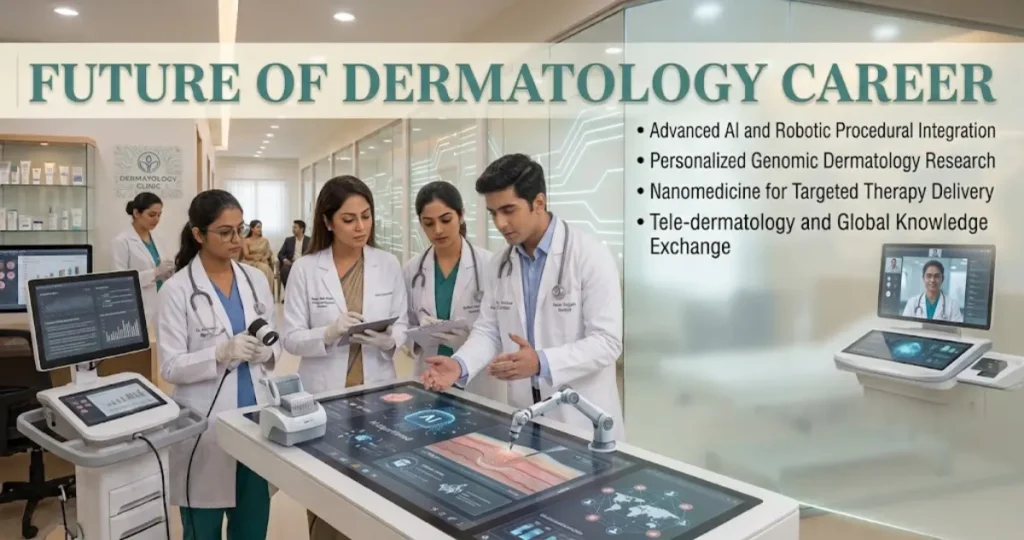
The specialty continues to interact with advances in:
- Digital healthcare
- Diagnostic technology
- Imaging
- Laser-based procedures
- New medications
- Biologic therapies
- Skin cancer detection
- Teledermatology
- Clinical research
- Personalized treatment
Technology can support diagnosis and patient management, but it does not remove the need for professional judgment.
Future dermatologists will need strong clinical fundamentals alongside the ability to evaluate new technologies and evidence.
The wider medical sector is also changing through artificial intelligence, digital health, advanced diagnostics, and new therapeutic approaches. Fullipedia’s broader article on Future of Medical Careers in India provides additional context.
Is Dermatology a Good Career for Private Practice?
Dermatology can provide opportunities for private practice, especially for doctors who enjoy outpatient consultations and appropriately trained procedures.
A successful practice requires more than equipment or marketing.
Professional credibility depends on:
- Correct diagnosis
- Evidence-based treatment
- Ethical patient communication
- Appropriate referrals
- Proper documentation
- Patient safety
- Continuing education
- Compliance with applicable regulations
A dermatologist should recommend procedures based on genuine clinical or appropriately assessed patient needs rather than commercial pressure.
Dermatology Career Guide: Common Mistakes Students Should Avoid
Choosing Dermatology Only for Money
Income can vary substantially and should not be treated as guaranteed.
Assuming Dermatology Is Only Cosmetic
Medical dermatology covers a broad range of diseases and clinical problems.
Ignoring Training Quality
The name of a postgraduate specialty does not guarantee identical clinical exposure at every institution.
Following Popularity
A specialty can be highly popular while still being a poor personal fit for an individual student.
Ignoring Patient Interaction
Dermatology involves substantial patient communication and clinical examination.
Depending on Outdated Admission Information
Medical education regulations and admission procedures can change. Current official information should be checked.
Frequently Asked Questions
What is Dermatology?
Dermatology is the medical specialty concerned with diseases and conditions involving the skin, hair, nails, and related structures.
Is Dermatology a good career after MBBS?
Dermatology can be a strong career option for MBBS graduates who enjoy clinical diagnosis, skin diseases, outpatient care, patient interaction, and appropriate procedures.
What degree is required for Dermatology in India?
The recognized postgraduate pathway includes MD Dermatology, Venereology and Leprosy. Current eligibility and admission requirements should be verified through official sources.
What does a dermatologist treat?
Dermatologists treat a wide range of skin, hair, and nail conditions, including acne, eczema, psoriasis, infections, pigmentation disorders, hair disorders, nail conditions, and skin tumors.
Is Dermatology mostly cosmetic?
No. Cosmetic and aesthetic dermatology is only one part of the field. Medical dermatology covers numerous diseases and clinical conditions.
Does Dermatology have good private practice scope?
Dermatology can provide private-practice opportunities. Actual success depends on clinical expertise, location, patient demand, experience, professional reputation, services, and ethical practice.
Does Dermatology have good work-life balance?
Dermatology can offer substantial outpatient-based work, but work-life balance depends on the employer, hospital, clinic, patient volume, procedures, emergency duties, and practice model.
Is Dermatology difficult to study?
Dermatology requires strong clinical observation, diagnostic reasoning, knowledge of diseases, pharmacology, pathology, and treatment approaches. Postgraduate training requires sustained study and clinical practice.
What skills does a dermatologist need?
Important skills include clinical observation, diagnostic reasoning, patient communication, attention to detail, procedural competence where applicable, ethical judgment, and continuous learning.
Can a dermatologist work in a hospital?
Yes. Dermatologists can work in government hospitals, private hospitals, teaching hospitals, medical colleges, clinics, and specialized healthcare centers.
Can dermatologists conduct procedures?
Appropriately trained dermatologists may perform procedures within their qualifications, training, professional scope, and applicable regulations.
Should students choose Dermatology only because it has fewer emergencies?
No. Workload varies by setting. Career choice should be based on genuine interest in dermatology and the type of clinical work involved.
Conclusion
This Dermatology Career Guide shows that dermatology is a broad medical specialty rather than a field limited to cosmetic skincare. It involves diagnosis and treatment of diseases affecting the skin, hair, nails, and related structures, along with appropriate procedures and long-term patient care.
For an MBBS graduate in India, dermatology can provide career opportunities in hospitals, clinics, academic medicine, research, specialized centers, and private practice. The National Medical Commission recognizes MD Dermatology, Venereology and Leprosy within the postgraduate medical education framework.
A strong Dermatology Career Guide must also recognize that income, work-life balance, private-practice potential, and career growth vary according to experience, location, training, practice model, patient volume, and professional expertise.
Students considering this specialty should examine their internship experience, clinical interests, communication skills, preference for outpatient medicine, procedural interest, career goals, and postgraduate training opportunities.
The best medical specialty is not necessarily the most popular or highest-paying specialty. It is the specialty that fits the doctor’s abilities, interests, professional goals, and preferred way of caring for patients.