
Introduction
Choosing a medical specialty after MBBS requires a clear understanding of the education pathway, daily responsibilities, employment options, professional growth, and long-term opportunities. Cardiology Career Scope in India is particularly relevant for medical graduates who are interested in cardiovascular medicine, diagnostic procedures, emergency care, interventional techniques, research, teaching, and advanced hospital practice.
Cardiology is a highly specialized area of medicine focused on the diagnosis, management, prevention, and monitoring of diseases affecting the heart and blood vessels. Cardiologists may work in multispecialty hospitals, cardiac institutes, government hospitals, private hospitals, clinics, academic institutions, research organizations, and healthcare technology environments.
The career is not limited to hospital employment. Qualified cardiologists can develop careers in clinical practice, interventional cardiology, academic medicine, research, preventive cardiology, cardiac rehabilitation, healthcare administration, and selected telemedicine services.
Students comparing specialties after MBBS can also read Medical Specialization After MBBS in India to understand how cardiology fits into the wider postgraduate medical education pathway.
What Is Cardiology?
Cardiology is a medical specialty concerned with the cardiovascular system, including the heart and blood vessels. Cardiologists evaluate patients with conditions such as coronary artery disease, heart failure, arrhythmias, hypertension-related cardiovascular complications, valvular heart disease, and other cardiovascular disorders.
The specialty combines clinical assessment with investigations and, in some career pathways, advanced procedures. Depending on their training and professional role, cardiologists may use ECG, echocardiography, stress testing, cardiac imaging, catheter-based investigations, and other diagnostic or therapeutic techniques.
The field requires continuous learning because cardiovascular medicine changes with advances in diagnostics, devices, medications, minimally invasive procedures, imaging, and digital healthcare.
The World Health Organization identifies cardiovascular diseases as a major global health concern, making cardiovascular prevention, diagnosis, treatment, and long-term management important areas of healthcare.
Cardiology Career Scope in India After MBBS
The pathway to a cardiology career is longer than the pathway to many general medical roles because cardiology is a super-specialized field.
A simplified career pathway is:
MBBS → Postgraduate Medical Qualification → Super-Specialty Training in Cardiology → Cardiologist
The exact admission route, eligibility requirements, recognized qualifications, and training regulations should be checked against current official requirements before applying.
The National Medical Commission lists DM Cardiology among recognized super-specialty qualifications. Students should use current NMC information when planning their postgraduate and super-specialty education.
Students who are still deciding between medical specialties can also explore How to Choose a Medical Branch After MBBS for a broader specialty-selection framework.
Educational Pathway to Become a Cardiologist in India
A cardiology career generally begins with medical education and progressively advanced clinical training.
MBBS
The MBBS degree provides the foundation in anatomy, physiology, pathology, pharmacology, medicine, surgery, community medicine, and clinical practice. During medical school, students interested in cardiology can develop an early interest in cardiovascular physiology, internal medicine, emergency care, ECG interpretation, and clinical diagnosis.
Postgraduate Medical Training
After MBBS, the doctor needs to pursue the applicable postgraduate qualification and training route required for advanced cardiology specialization. Current admission regulations should always be checked through official sources because medical education requirements can change.
Super-Specialty Cardiology Training
Cardiology is a super-specialty field. NMC documentation identifies DM Cardiology as the nomenclature for the higher/super-specialty field of Cardiology.
Professional Development After Specialization
Qualification is not the end of learning. Cardiologists need continuing professional development to remain familiar with new clinical guidelines, diagnostic technologies, devices, procedures, medicines, and evidence-based practices.
For a wider comparison of postgraduate options, see Best MD Branches After MBBS in India.
Why Cardiology Is an Important Medical Career
Cardiovascular disease creates a substantial need for prevention, diagnosis, treatment, and long-term follow-up. Doctors working in this field deal with both acute and chronic cardiovascular conditions.
A cardiologist may manage patients with chest pain, coronary artery disease, rhythm disorders, heart failure, hypertension-related cardiovascular complications, structural heart disease, and other conditions.
The work can include outpatient consultations, inpatient care, diagnostic evaluation, procedure-related responsibilities, emergency management, multidisciplinary coordination, and long-term patient follow-up.
The scope of the specialty also extends beyond treating established disease. Preventive cardiology focuses on risk factors such as hypertension, diabetes, obesity, smoking, physical inactivity, and abnormal lipid levels.
Cardiology Jobs in India
Cardiologists can work in different healthcare environments depending on their training, experience, interests, and professional goals.
Government Hospitals
Government hospitals and public healthcare institutions can provide opportunities in clinical services, specialist departments, teaching, and patient care. Large government institutions may also provide exposure to complex cardiovascular cases.
Private Hospitals
Private hospitals and multispecialty hospitals employ cardiologists for outpatient consultations, inpatient management, cardiac emergencies, diagnostic services, and procedural care.
Dedicated Cardiac Institutes
Specialized cardiac hospitals and institutes provide opportunities for doctors who want to work in cardiovascular-focused environments. These settings may provide exposure to high patient volumes, advanced diagnostic facilities, cardiac procedures, and multidisciplinary teams.
Private Clinics
Experienced cardiologists may establish or join private practices. Clinic-based work can focus on consultation, diagnosis, preventive cardiovascular care, medication management, follow-up, and referral for advanced procedures when required.
Academic Medicine
Doctors interested in teaching can work in medical colleges and teaching hospitals. Academic careers can combine patient care with undergraduate teaching, postgraduate training, seminars, clinical discussions, publications, and research.
Research
Cardiology also provides opportunities in clinical research, epidemiology, cardiovascular prevention, medical devices, pharmacology, imaging, digital health, and outcomes research.
Healthcare Administration
Experienced specialists can move into clinical leadership, hospital administration, quality improvement, healthcare program management, or specialist department leadership.
Cardiology Career Opportunities in Private Practice
Private practice is one of the professional pathways available to specialists after gaining appropriate qualifications and experience.
A cardiology clinic can provide services such as cardiovascular consultations, risk assessment, follow-up care, blood pressure management, medication review, preventive counseling, and interpretation or coordination of appropriate investigations.
Some patients may require referral to hospitals or specialized cardiac centers for advanced diagnostic or interventional procedures.
Private practice also requires skills beyond clinical medicine. Patient communication, documentation, scheduling, ethical practice, team management, regulatory compliance, and healthcare administration can become important parts of the professional role.
Interventional Cardiology as a Career Path
Interventional cardiology is an advanced area involving catheter-based procedures used in the diagnosis and treatment of cardiovascular conditions.
Professionals pursuing this area require specialized training and practical experience. The work can involve technically demanding procedures, close teamwork, patient monitoring, and rapid decision-making.
An interventional cardiology career may be based in tertiary-care hospitals, cardiac institutes, and specialized cardiovascular centers with appropriate infrastructure.
This pathway can appeal to doctors who enjoy procedural medicine, technology, acute clinical situations, and team-based hospital care.
Preventive Cardiology Career Opportunities

Not every cardiovascular career is centered on emergency procedures.
Preventive cardiology focuses on reducing cardiovascular risk before serious disease develops or progresses. Doctors working in prevention may address blood pressure, diabetes, cholesterol, obesity, smoking, physical activity, diet, and other cardiovascular risk factors.
Preventive care can be relevant in hospitals, clinics, community health programs, corporate wellness initiatives, research projects, and public health settings.
The preventive side of cardiology can also overlap with long-term chronic disease management and patient education.
Academic and Teaching Career in Cardiology
Medical education is another possible career direction.
A cardiologist working in academic medicine may teach medical students, train postgraduate doctors, participate in clinical case discussions, supervise research, publish scientific work, attend conferences, and contribute to curriculum development.
Academic medicine can be combined with clinical practice. Teaching hospitals often provide an environment where patient care, education, and research operate together.
Doctors interested in this route should develop communication, teaching, research methodology, scientific writing, presentation, and evidence-appraisal skills.
Fullipedia’s Future of Medical Careers in India also discusses how technology, research, and emerging healthcare models are affecting medical careers.
Research Opportunities in Cardiology
Research is an important part of modern cardiovascular medicine.
Cardiology research can cover areas such as:
- Cardiovascular disease prevention
- Heart failure
- Coronary artery disease
- Arrhythmias
- Cardiac imaging
- Interventional techniques
- Medical devices
- Digital health
- Cardiovascular epidemiology
- Clinical trials
- Pharmacological treatments
- Patient outcomes
- Cardiac rehabilitation
Doctors involved in research may work with universities, hospitals, research organizations, pharmaceutical companies, medical-device companies, or independent research groups.
Research experience can also strengthen an academic medical career.
Role of Technology in Cardiology Careers
Technology is changing cardiovascular diagnosis, treatment, monitoring, research, and patient communication.
Modern cardiology uses advanced imaging, digital records, remote monitoring, wearable devices, artificial intelligence-assisted systems, telemedicine, and data-driven clinical research.
AI can support areas such as clinical decision support, pattern recognition, medical research, documentation, and risk assessment. It does not remove the need for qualified medical judgment.
Doctors entering the field can benefit from understanding digital health, medical data, evidence-based practice, and responsible use of emerging technologies.
The Indian Council of Medical Research provides official research and biomedical guidance relevant to healthcare and medical research in India.
Telemedicine and Cardiology Career Scope
Telemedicine can complement traditional cardiovascular care in appropriate situations.
Remote consultations can support follow-up, medication discussions, lifestyle counseling, chronic disease management, review of selected reports, and communication with patients who face geographic barriers to specialist care.
Telemedicine cannot replace every aspect of cardiology. Acute chest pain, unstable patients, invasive procedures, emergency intervention, and many diagnostic examinations require physical healthcare facilities and appropriate clinical infrastructure.
Doctors considering digital practice should follow applicable professional and regulatory requirements.
Skills Required for a Successful Cardiology Career
A cardiologist needs strong medical knowledge along with practical and interpersonal skills.
Clinical Decision-Making
Cardiovascular cases can require rapid assessment and careful interpretation of symptoms, examination findings, investigations, and patient history.
Diagnostic Skills
Understanding ECGs, imaging, laboratory findings, and other cardiovascular investigations is important for clinical practice.
Communication
Cardiologists frequently explain diagnoses, treatment options, risks, procedures, lifestyle changes, and follow-up plans to patients and families.
Procedural Skills
Doctors pursuing interventional or procedure-oriented pathways require specialized technical skills and extensive supervised training.
Teamwork
Cardiac care often involves physicians, nurses, technicians, surgeons, anesthesiologists, physiotherapists, emergency teams, and other healthcare professionals.
Continuous Learning
Guidelines, technologies, medications, devices, and treatment approaches continue to evolve. Professional development remains an important part of the career.
Cardiology Work Environment in India

The working environment depends on the type of institution and professional role.
A cardiologist in an emergency-focused tertiary hospital may encounter acute cases, urgent procedures, inpatient responsibilities, and on-call duties.
A cardiologist primarily working in outpatient practice may have more scheduled consultations and follow-up appointments.
An academic cardiologist may divide time between clinical care, teaching, research, and administrative responsibilities.
An interventional cardiologist may spend substantial time in procedure areas and cardiac catheterization laboratories.
The same specialty can produce very different daily routines depending on hospital type, patient volume, seniority, subspecialization, and employment model.
This distinction is important when evaluating Cardiology Career Scope in India rather than looking only at the specialty name.
Cardiology Career Scope in India Compared With Other Medical Specialties
Cardiology is one of several advanced medical career pathways available to doctors.
Students comparing cardiology with other branches should examine:
- Interest in cardiovascular medicine
- Patient interaction
- Emergency responsibilities
- Procedural exposure
- Length and intensity of training
- Hospital-based work
- Private practice opportunities
- Teaching opportunities
- Research interests
- Long-term professional goals
Fullipedia’s Best Medical Branch in India provides broader information about different medical specialties.
A specialty should not be selected only because it appears frequently in lists of popular medical branches. The actual work, training requirements, professional environment, and personal interests matter.
Cardiology Career Scope vs Cardiology Salary in India
Career scope and salary are related topics but they answer different questions.
Cardiology Career Scope in India focuses on professional opportunities, job roles, work environments, specialization pathways, private practice, academics, research, technology, and future professional development.
Cardiology salary focuses on income, compensation, experience, location, employment model, and other financial factors.
Fullipedia already has a dedicated article on Cardiology Salary in India covering the salary-focused search intent.
Keeping these topics separate helps readers find information according to their actual search purpose.
Factors That Can Affect Long-Term Cardiology Career Growth
Career development can vary between individuals.
Experience
Clinical experience can influence the responsibilities a cardiologist takes on and the professional roles available over time.
Subspecialization
Additional focused training can allow doctors to develop expertise in specific areas of cardiovascular medicine.
Location
Career opportunities vary between metropolitan areas, smaller cities, government institutions, private hospitals, and underserved regions.
Professional Network
Academic collaborations, conferences, professional organizations, and multidisciplinary relationships can support professional development.
Research and Publications
Research participation and scientific publications can be particularly relevant to academic and research-oriented careers.
Technology Skills
Familiarity with digital healthcare, cardiovascular imaging, remote monitoring, and evidence-based technological tools can support adaptation to changing clinical environments.
Future of Cardiology in India
The future of cardiology will be influenced by disease prevention, population ageing, technology, research, healthcare access, and the increasing use of digital tools.
Preventive cardiovascular care is likely to remain important because reducing risk factors can lower the burden of cardiovascular disease.
Advanced imaging and minimally invasive technologies continue to expand the diagnostic and therapeutic capabilities available to specialist teams.
Digital health can improve follow-up and monitoring for selected patients.
Research into cardiovascular disease, medical devices, drugs, genetics, artificial intelligence, and personalized medicine can create additional professional and academic opportunities.
The future career environment will also depend on healthcare infrastructure, medical education policies, technology adoption, and regional demand.
Is Cardiology a Good Career After MBBS?
The answer depends on the student’s interests, professional goals, tolerance for intensive training, preferred work environment, and interest in cardiovascular medicine.
Cardiology can suit doctors who enjoy complex clinical decision-making, cardiovascular physiology, diagnostic investigations, procedures, emergency medicine, long-term patient care, teaching, or research.
The career also requires commitment to continuous learning and professional development.
Students should speak with cardiology residents and practicing cardiologists, observe the actual working environment where possible, review current postgraduate regulations, and compare the specialty with other branches before making a career decision.
How to Build a Cardiology Career in India
A practical career-development approach can include:
Build Strong Medical Foundations
Develop a strong understanding of internal medicine, physiology, pharmacology, pathology, and clinical diagnosis.
Develop Interest During Medical School
Use clinical rotations, case discussions, academic resources, and supervised clinical exposure to understand cardiovascular medicine.
Choose the Appropriate Postgraduate Pathway
Review current eligibility requirements and recognized training routes through official medical education sources.
Develop Clinical and Procedural Skills
Use supervised training to develop cardiovascular assessment, diagnostic interpretation, patient management, and procedure-related skills appropriate to the training level.
Consider a Professional Focus
Decide whether your long-term interests are centered on clinical practice, interventional cardiology, prevention, academics, research, private practice, or a combination.
Continue Professional Education
Attend relevant academic programs, conferences, workshops, and continuing medical education activities.
Challenges in a Cardiology Career
Cardiology can involve demanding professional responsibilities.
Emergency cardiovascular cases can require rapid assessment and treatment. Hospital-based cardiologists may have on-call responsibilities. Procedure-oriented careers require technical precision and close teamwork.
Continuous learning is also necessary because cardiovascular medicine evolves rapidly.
Patient communication can become challenging when discussing serious diagnoses, invasive procedures, long-term medication, lifestyle changes, and prognosis.
These realities should be considered alongside career opportunities when evaluating the specialty.
Frequently Asked Questions About Cardiology Career Scope in India
What is the career scope of cardiology in India?
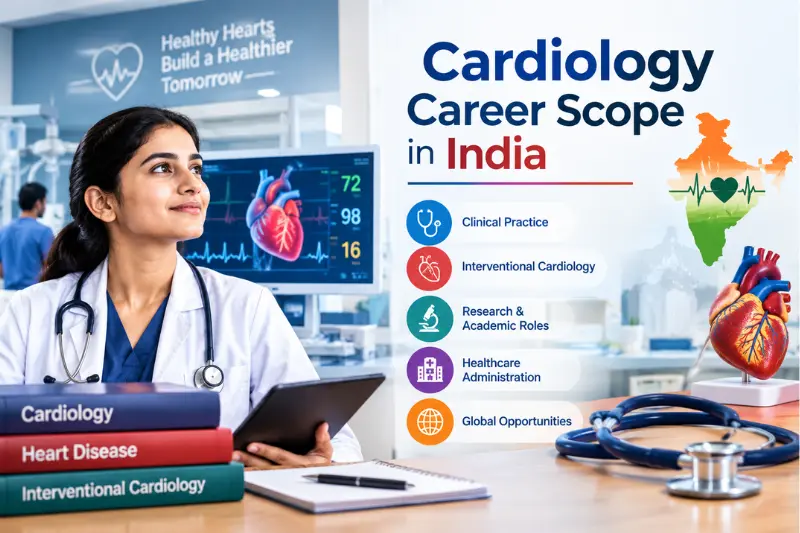
The scope includes hospital practice, cardiac institutes, private clinics, preventive cardiology, interventional cardiology, academic medicine, research, healthcare administration, and selected digital-health services.
Can a cardiologist work in private practice?
Yes. After obtaining the appropriate recognized qualifications and experience, a cardiologist can work in or establish a private clinical practice subject to applicable professional and regulatory requirements.
Is cardiology only a hospital-based career?
No. Cardiologists can work across hospitals, cardiac institutes, outpatient clinics, academic institutions, research environments, healthcare organizations, and selected telemedicine settings.
Does cardiology offer research opportunities?
Yes. Research opportunities can include cardiovascular disease prevention, clinical trials, imaging, medical devices, digital health, epidemiology, pharmacology, and patient outcomes.
Can cardiologists work in academics?
Yes. Academic cardiologists can combine clinical practice with teaching, postgraduate training, research, scientific writing, and medical education.
What skills are important for a cardiologist?
Important skills include clinical reasoning, diagnostic interpretation, communication, teamwork, procedural ability where relevant, decision-making, evidence-based practice, and continuous professional learning.
Is cardiology different from cardiothoracic surgery?
Yes. Cardiology is a medical specialty focused on cardiovascular diagnosis and medical or catheter-based management within the relevant training pathway. Cardiothoracic surgery is a surgical field involving operative treatment of diseases of the heart, chest, and related structures.
Does cardiology have future opportunities in India?
The field has multiple professional directions across clinical practice, prevention, advanced procedures, research, teaching, technology, and healthcare services. The availability of specific positions varies by institution, location, qualifications, experience, and healthcare infrastructure.
Conclusion
Cardiology Career Scope in India extends far beyond a single hospital job. Qualified specialists can develop careers in clinical cardiology, interventional practice, preventive care, private practice, academic medicine, research, healthcare administration, and selected digital-health services.
The pathway requires extensive medical education and specialized training. NMC’s current regulatory information should be checked before making decisions about eligibility, qualifications, and postgraduate training.
Cardiology can provide a wide professional landscape for doctors with a strong interest in cardiovascular medicine, complex clinical decision-making, patient care, procedures, technology, research, or teaching.
Students should evaluate the specialty based on the actual training pathway, working environment, responsibilities, professional interests, and long-term career goals. For a broader comparison of medical specialization options, readers can also explore Medical Branches List After NEET in India and related Fullipedia medical career guides.