
Introduction
India’s healthcare sector is moving through a major period of transformation. Medical careers are no longer shaped only by traditional hospital departments and conventional specialties. Advances in artificial intelligence, digital health, precision medicine, genomics, minimally invasive procedures, advanced diagnostics, telemedicine, medical research, and healthcare data are creating new professional opportunities.
The future of medical careers in India will therefore involve both established specialties and emerging areas that combine medicine with technology, research, data, and population health.
The National Medical Commission continues to regulate medical education and postgraduate standards in India. Students and medical professionals should check the latest National Medical Commission rules and regulations when reviewing current medical education and postgraduate requirements.
At the same time, India’s digital-health infrastructure is expanding. The Ayushman Bharat Digital Mission is designed to support an integrated and interoperable digital healthcare ecosystem.
This changing environment means that tomorrow’s medical professionals may need more than clinical knowledge alone. Communication, technology literacy, research skills, data interpretation, ethical decision-making, and continuous learning are becoming increasingly important.
Why the Future of Medical Careers in India Is Changing
Several forces are reshaping healthcare and medical employment in India.
The first is population and demographic change. Healthcare requirements differ across children, working-age adults, older adults, and people living with chronic diseases. As healthcare needs become more complex, demand for specialized knowledge can increase.
The second factor is the growing burden of chronic and lifestyle-related diseases. Long-term conditions require diagnosis, monitoring, prevention, treatment, and continuing patient support.
Technology is another major influence. AI-assisted diagnostics, electronic health records, remote monitoring, digital consultations, advanced imaging, robotics, and clinical decision-support systems are changing how healthcare professionals work.
Medical research is also becoming more interdisciplinary. A future physician may work with geneticists, data scientists, biomedical engineers, pharmacists, software specialists, epidemiologists, and public-health professionals.
For readers who want to understand the broader postgraduate pathway, see medical specialization after MBBS in India.
Emerging Medical Specializations in India
The most promising areas of future medical careers are not necessarily completely new specialties. Some are emerging at the intersection of established medicine, technology, research, and changing healthcare requirements.
Students can also review the medical branches list after NEET in India to understand how different specialties fit into the wider medical education pathway.
Artificial Intelligence in Medicine
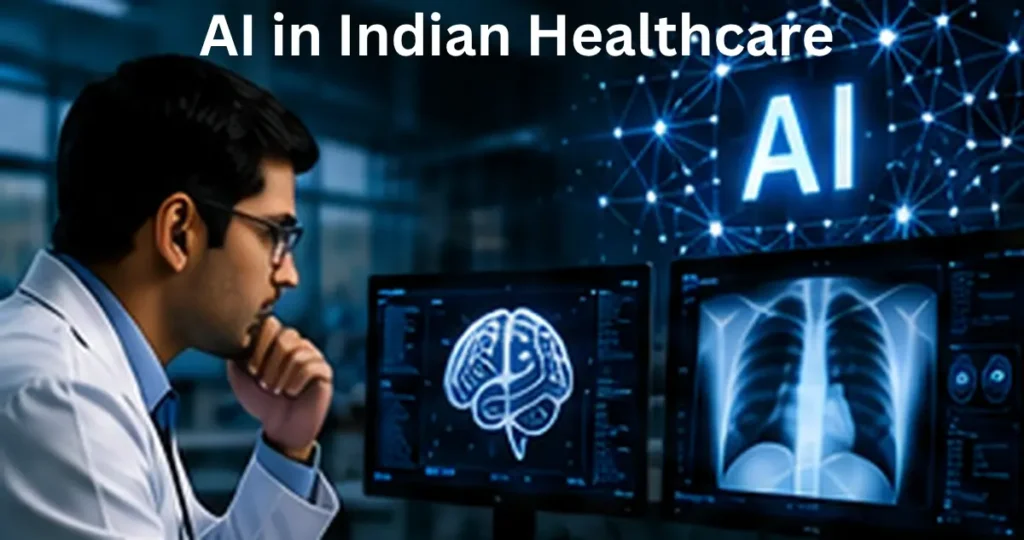
Artificial intelligence is becoming an important part of modern healthcare.
AI systems can assist with medical-image analysis, pattern recognition, clinical documentation, risk prediction, research, and decision support. However, AI should support qualified healthcare professionals rather than replace professional judgment.
The Indian Council of Medical Research has published ethical guidelines for AI in biomedical research and healthcare. These guidelines address ethical decision-making, governance, informed consent, and responsible development and use of AI-based healthcare solutions.
India is also developing national strategies for AI in healthcare. The National Health Authority reported in 2026 that AI applications in India already span areas such as diagnostics, clinical decision support, drug discovery, disease surveillance, and health-system planning.
This creates potential career opportunities for professionals who understand both medicine and AI.
Future roles may include:
- Clinical AI specialist
- Medical AI researcher
- Healthcare data specialist
- AI implementation consultant
- Clinical informatics professional
- Medical technology researcher
Medical professionals who understand the limitations and appropriate applications of AI may become increasingly valuable as healthcare organizations adopt these systems.
Digital Health and Telemedicine
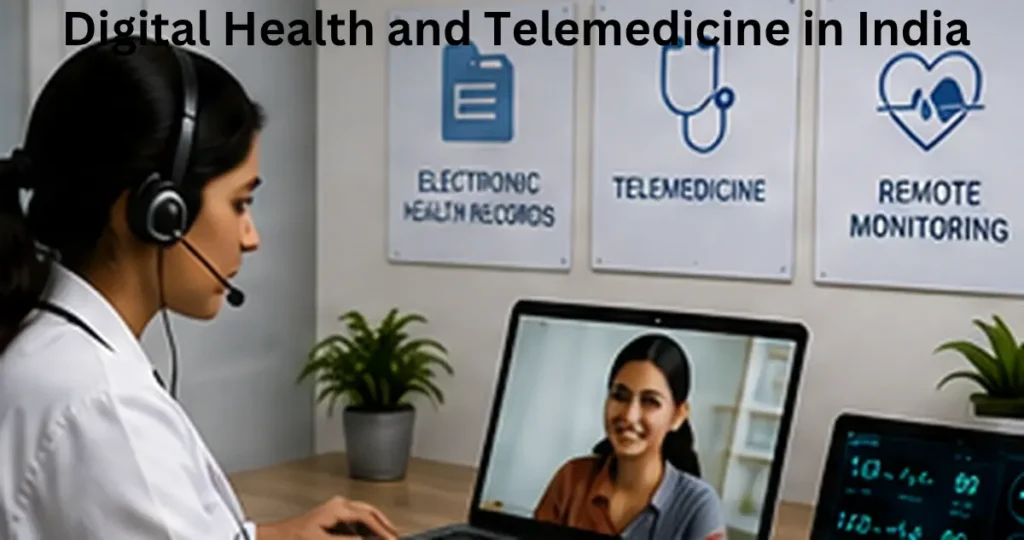
Digital healthcare is another major area influencing the future of medical careers in India.
India’s digital-health infrastructure is also expanding through the Ayushman Bharat Digital Mission, which aims to support an integrated and interoperable digital healthcare ecosystem. This development can create new opportunities in telemedicine, digital health, health information management, and technology-enabled healthcare.
Telemedicine allows healthcare professionals to interact with patients remotely when appropriate. Digital records and connected healthcare systems can also make it easier to share relevant patient information across healthcare settings.
The Ayushman Bharat Digital Mission aims to develop the backbone for integrated digital-health infrastructure and create an interoperable digital healthcare ecosystem in India.
This development can create opportunities beyond conventional clinical practice.
Medical professionals may increasingly work in:
- Telemedicine
- Digital health platforms
- Clinical informatics
- Remote patient monitoring
- Digital health administration
- Healthcare technology companies
- Health information management
Digital health does not eliminate the need for doctors. Instead, it can change how doctors communicate, document, monitor, and coordinate patient care.
Genomic Medicine and Precision Medicine
Genomic medicine is another field with long-term potential.
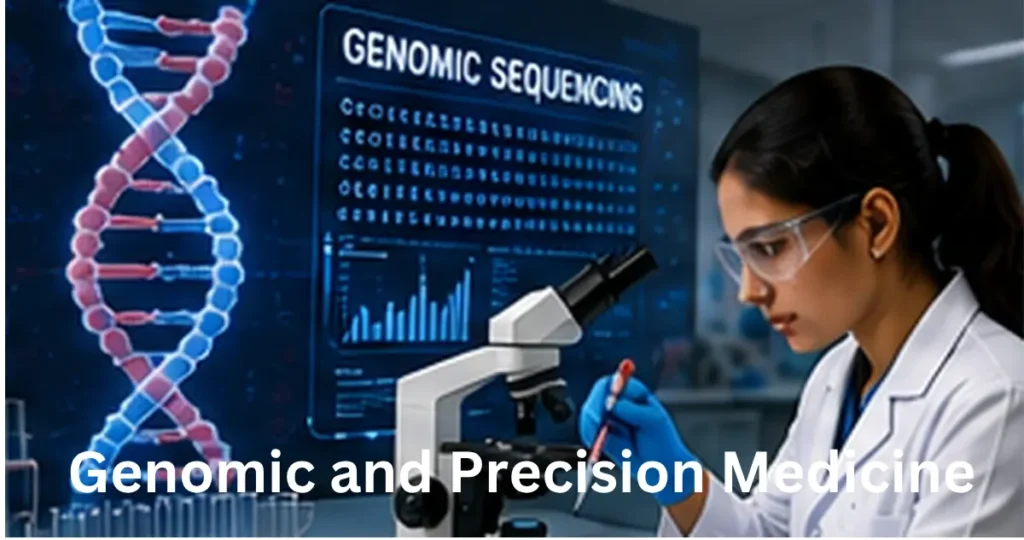
Traditional medicine often uses broad treatment approaches based on diagnosis and clinical characteristics. Precision medicine seeks to use information about an individual’s genetics, environment, and other biological characteristics to improve prevention, diagnosis, and treatment decisions.
Genomic technologies can contribute to areas such as cancer care, inherited disorders, reproductive medicine, pharmacogenomics, and rare-disease diagnosis.
Future careers may involve:
- Clinical genetics
- Genomic counseling
- Molecular diagnostics
- Genomic research
- Precision oncology
- Pharmacogenomics
- Bioinformatics
This field requires collaboration between physicians, laboratory specialists, geneticists, researchers, and data professionals.
Interventional and Minimally Invasive Medicine
Medical procedures are becoming increasingly precise and less invasive in many areas of healthcare.
Advances in imaging, endoscopic techniques, catheter-based procedures, laparoscopic surgery, robotic systems, and other technologies are changing how certain conditions are diagnosed and treated.
Doctors working in procedure-oriented specialties may therefore need increasingly sophisticated technical skills.
For students specifically interested in surgical postgraduate pathways, the guide to best MS branches in India provides a separate discussion of major surgical specialties.
Geriatric Medicine
India’s changing demographic structure is likely to increase the importance of healthcare for older adults.
Older patients can have multiple chronic conditions, complex medication requirements, mobility concerns, cognitive issues, and different healthcare needs from younger patients.
Geriatric medicine focuses on comprehensive healthcare for older adults rather than treating one disease in isolation.
Future opportunities can extend beyond hospitals into:
- Long-term care
- Rehabilitation
- Community healthcare
- Home healthcare
- Chronic disease management
- Senior-care services
- Integrated care programs
Doctors with expertise in managing complex health needs among older adults may become increasingly important as healthcare systems adapt to demographic changes.
Palliative and Supportive Medicine
Palliative medicine focuses on improving quality of life for people living with serious illnesses.
It involves symptom management, communication, supportive care, coordination with families, and multidisciplinary healthcare.
As medical treatment becomes more advanced and patients live longer with complex diseases, the importance of supportive and palliative care can increase.
This area also requires strong communication and ethical decision-making skills.
Emergency Medicine
Emergency medicine is already an established specialty, but its future importance is likely to remain significant.
Modern healthcare systems require professionals capable of rapid assessment, stabilization, triage, trauma management, resuscitation, and emergency decision-making.
Growing healthcare infrastructure and increasing specialization can create opportunities in emergency departments, trauma centers, hospitals, and other acute-care environments.
The future emergency physician will increasingly work alongside advanced monitoring systems, digital records, imaging technologies, and multidisciplinary emergency teams.
Preventive and Lifestyle Medicine
Healthcare is gradually placing greater emphasis on prevention rather than waiting until disease becomes advanced.
Preventive medicine can involve:
- Health screening
- Vaccination
- Nutrition
- Physical activity
- Risk assessment
- Early disease detection
- Population health
- Chronic disease prevention
This creates opportunities for doctors and healthcare professionals working in preventive programs, public health, corporate wellness, community healthcare, and primary care.
Medical Technology Will Create Hybrid Careers
One of the most important trends in the future of medical careers in India is the growth of hybrid professional roles.
A doctor does not necessarily have to choose between medicine and technology.
Medical professionals may develop additional expertise in:
- Artificial intelligence
- Data science
- Bioinformatics
- Medical devices
- Digital health
- Health informatics
- Biomedical engineering
- Clinical research
- Healthcare management
For example, a physician with an interest in technology could participate in developing clinical decision-support systems. A medical professional interested in research could work with genomic data. Another doctor might move into digital-health leadership while maintaining clinical responsibilities.
These hybrid careers can provide new opportunities for professionals who want to work beyond conventional clinical practice.
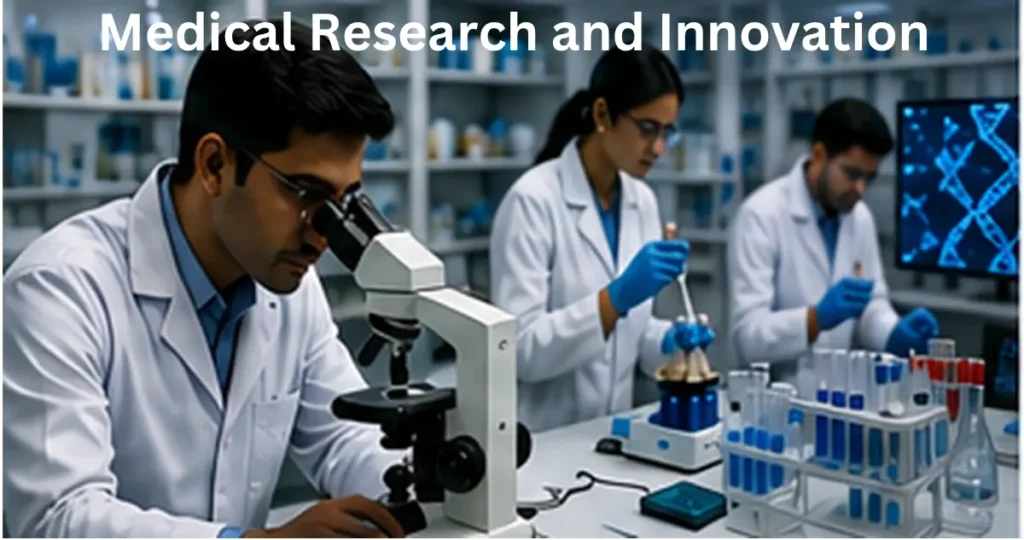
The Growing Importance of Medical Research
Medical research will remain an important part of future healthcare.
New treatments, diagnostic methods, medical devices, vaccines, medicines, and healthcare technologies depend on research.
Medical professionals can participate in:
- Clinical trials
- Translational research
- Biomedical research
- Epidemiological studies
- Public-health research
- Medical-device development
- Drug development
- Genomic research
- Medical education research
Medical professionals interested in established postgraduate routes can also compare the best MD branches after MBBS in India when considering research, teaching, and clinical career directions.
Research careers can exist within universities, medical colleges, hospitals, pharmaceutical companies, biotechnology organizations, research institutes, and healthcare technology companies.
Professionals who understand both clinical problems and research methodology can contribute to developing practical healthcare solutions.
Future Opportunities in Medical Diagnostics
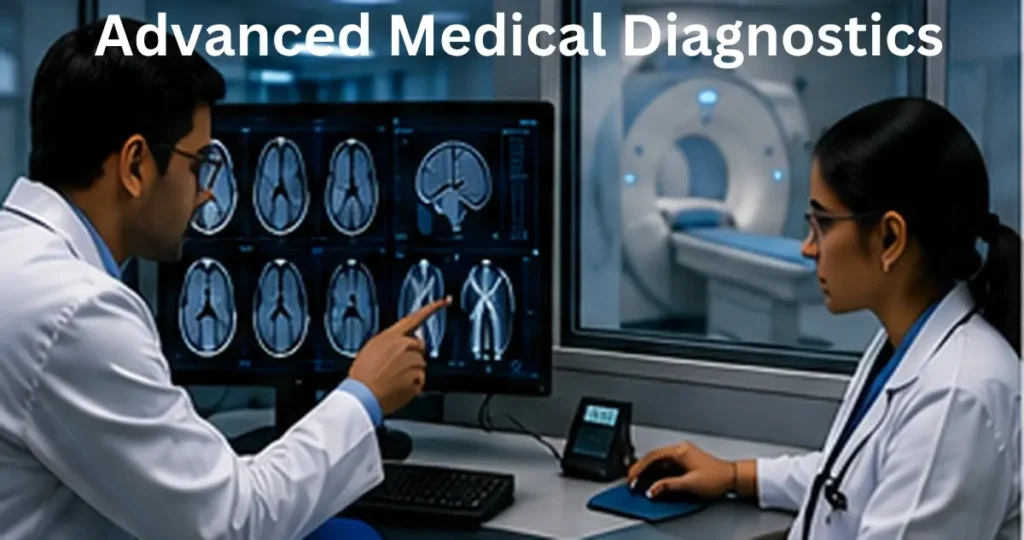
Diagnostics is another area experiencing rapid technological development.
Advanced imaging, molecular testing, pathology automation, genomic testing, artificial intelligence, and laboratory technologies are changing how diseases are detected.
The future diagnostic professional may increasingly work with sophisticated software, automated laboratory systems, high-resolution imaging, and large datasets.
This does not reduce the importance of professional expertise. Instead, it increases the need for specialists who can interpret complex information accurately and place diagnostic findings within the patient’s clinical context.
Medical Careers in Rural and Underserved Areas
The future of Indian healthcare is not limited to major metropolitan hospitals.
Access to healthcare remains an important issue across geographically diverse populations. Telemedicine, mobile healthcare, remote diagnostics, digital records, and community-health programs can help connect healthcare professionals with underserved populations.
Doctors interested in public health, primary care, emergency medicine, preventive medicine, family medicine, and digital health may find opportunities in programs designed to improve healthcare accessibility.
Technology can also allow specialists to support patients and healthcare workers in locations where specialist services are limited.
Healthcare Management as a Medical Career Path
Some medical professionals eventually move into healthcare administration and management.
Hospitals and healthcare organizations require professionals who understand clinical operations as well as management.
Possible areas include:
- Hospital administration
- Healthcare quality
- Patient safety
- Clinical governance
- Healthcare operations
- Health policy
- Medical administration
- Digital-health management
A medical background can provide valuable insight into patient care when combined with management and organizational skills.
The Role of Medical Education in Future Careers
Medical education itself is changing.
Digital learning platforms, simulation, virtual resources, online academic materials, and technology-assisted teaching are expanding the ways medical knowledge can be delivered.
Future medical educators may use:
- Virtual simulation
- Digital anatomy resources
- AI-assisted learning tools
- Online case discussions
- Interactive clinical scenarios
- Digital assessment systems
Doctors interested in teaching can therefore combine clinical expertise with educational technology.
Skills Future Medical Professionals Should Develop
A medical qualification remains the foundation of a medical career, but future professionals can benefit from developing additional skills.
Clinical Reasoning
Technology may provide information, but doctors still need to interpret findings and make responsible clinical decisions.
Communication
Patients need understandable explanations, informed consent, empathy, and clear guidance.
Technology Literacy
Medical professionals should understand how digital systems, AI tools, electronic records, and diagnostic technologies are used in healthcare.
- Research Skills
Understanding research methodology helps professionals evaluate evidence and distinguish reliable findings from unsupported claims.
Data Interpretation
Healthcare increasingly generates large amounts of clinical and research data. Professionals who can interpret data responsibly can contribute to better decision-making.
Ethical Decision-Making
As AI, genomics, digital records, and biotechnology advance, ethical questions become increasingly important.
Lifelong Learning
Medical knowledge does not remain static. Future specialists will need to update their knowledge throughout their careers.
Will Artificial Intelligence Replace Doctors?
AI is likely to change medical work, but replacing doctors entirely is a much broader and more complicated claim.
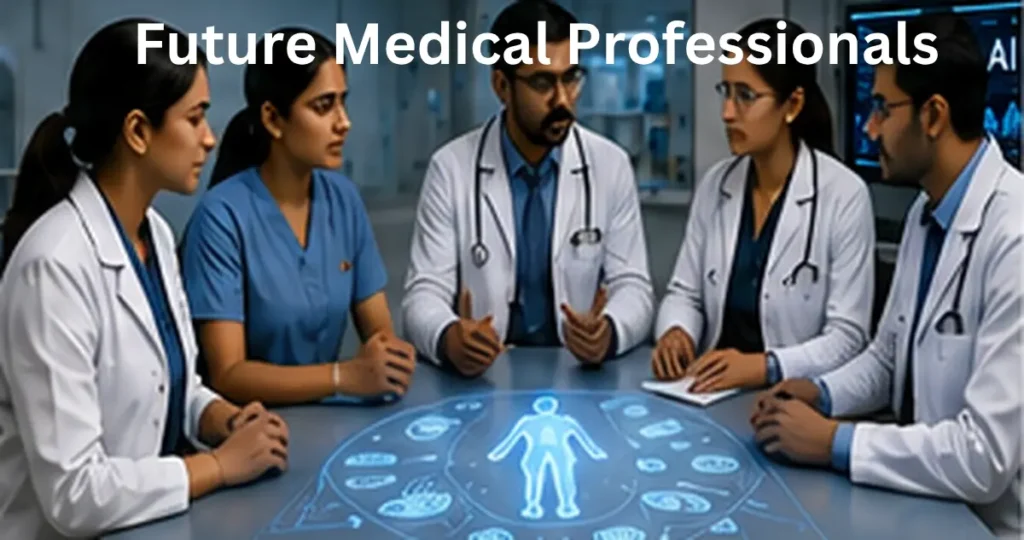
AI can assist with specific tasks such as pattern recognition, documentation, data analysis, and decision support. However, healthcare involves clinical responsibility, communication, physical examination, ethical judgment, patient preferences, uncertainty, and complex decision-making.
ICMR’s AI guidance emphasizes ethical governance and responsible application of AI in biomedical research and healthcare.
The more realistic future is therefore collaboration between healthcare professionals and intelligent technologies.
Doctors who understand how to use AI appropriately may be better positioned than doctors who completely ignore technological developments.
How Medical Careers May Change by 2030 and Beyond
The medical profession is likely to become increasingly multidisciplinary.
A future healthcare team could include:
- Physicians
- Surgeons
- Nurses
- Genetic specialists
- Data scientists
- AI specialists
- Biomedical engineers
- Clinical researchers
- Digital-health professionals
- Public-health experts
Instead of working in isolated departments, healthcare professionals may increasingly collaborate through integrated digital systems.
Specialists may also work across multiple locations through telemedicine and digital healthcare platforms.
This does not mean every doctor will need to become a programmer. Rather, medical professionals should understand the technologies relevant to their own area of practice.
Career Opportunities Beyond Traditional Hospital Practice
A medical degree does not necessarily restrict a professional to conventional hospital employment.
Depending on qualifications, experience, and applicable requirements, future career paths can include:
- Hospitals
- Private practice
- Medical colleges
- Research institutes
- Pharmaceutical companies
- Biotechnology companies
- Healthcare technology companies
- Digital-health organizations
- Public-health institutions
- Government healthcare
- Medical education
- Healthcare consulting
- Clinical research organizations
The best career direction depends on individual interests, qualifications, skills, and professional objectives.
For students who are still comparing conventional postgraduate options, Fullipedia’s medical specialization after MBBS in India guide provides a broader career roadmap.
Future Medical Careers and Work-Life Balance
Future career decisions should not focus exclusively on demand or earning potential.
Work environment matters as well.
Some technology-oriented roles may involve extensive screen-based work and data analysis. Clinical specialties may involve direct patient care and emergency responsibilities. Research careers can involve laboratory or academic work. Digital-health careers may involve technology projects, management, and healthcare operations.
Students interested in lifestyle should separately review which medical branch has the best work-life balance in India rather than mixing work-life balance with the future-trends discussion.
Future of Medical Careers in India: Key Trends to Watch
The most important trends include:
Artificial intelligence: AI-assisted diagnosis, documentation, research, and decision support.
Digital health: Connected healthcare systems, electronic records, digital identities, and remote services.
Precision medicine: Greater use of genomic and molecular information.
Advanced diagnostics: More sophisticated imaging and laboratory technologies.
Minimally invasive treatment: Increasing use of precise procedures and technology-assisted interventions.
Preventive healthcare: Greater emphasis on early detection and disease prevention.
Geriatric care: Growing need for healthcare designed around older adults.
Telemedicine: Increased use of remote healthcare where clinically appropriate.
Healthcare data: Greater importance of clinical information, analytics, and interoperability.
Interdisciplinary careers: More collaboration between medicine, technology, research, engineering, and public health.
FAQs About the Future of Medical Careers in India
What is the future of medical careers in India?
The future is likely to combine traditional medical specialties with digital health, artificial intelligence, advanced diagnostics, precision medicine, preventive healthcare, research, and technology-enabled patient care.
Which emerging medical specialization has the best future?
There is no single specialty that can be guaranteed to have the best future. Digital health, genomic medicine, geriatrics, advanced diagnostics, preventive medicine, emergency care, clinical research, and medical AI are among the areas experiencing important development.
Will AI replace doctors in India?
AI is more likely to assist doctors with specific tasks than completely replace physicians. Clinical judgment, patient communication, ethical responsibility, and complex decision-making remain important components of healthcare.
Is digital health a good career option for medical professionals?
Digital health can provide opportunities for professionals interested in healthcare technology, telemedicine, clinical informatics, digital records, remote monitoring, and healthcare systems.
Will traditional medical specialties remain important?
Yes. Patients will continue to need diagnosis, treatment, surgery, emergency care, preventive services, and specialist management. Technology is more likely to change how these specialties operate than eliminate the need for them.
What skills will future doctors need?
Future doctors will need strong clinical knowledge together with communication, evidence evaluation, technology literacy, research awareness, data interpretation, ethical reasoning, and lifelong-learning skills.
Is medical research a good future career?
Medical research can provide opportunities in universities, hospitals, research institutes, biotechnology, pharmaceuticals, clinical trials, public health, and healthcare technology.
Should students choose a specialty only because it has high future demand?
No. Future demand is only one factor. Students should also consider their interests, abilities, preferred work environment, training requirements, career goals, and long-term professional satisfaction.
Conclusion
The future of medical careers in India is likely to be defined by a combination of clinical expertise, technology, research, prevention, and patient-centered care.
Traditional specialties will remain important, but their methods of practice will continue to evolve. Artificial intelligence, digital health, genomics, precision medicine, advanced diagnostics, telemedicine, minimally invasive procedures, and healthcare data are already influencing the direction of modern medicine.
India’s digital-health infrastructure is being developed through initiatives such as the Ayushman Bharat Digital Mission, while institutions such as ICMR are addressing the ethical and responsible use of emerging technologies such as AI in healthcare.
For medical students and young professionals, the most valuable approach is not to chase every emerging trend. Instead, they should build strong medical fundamentals and gradually develop the technological, research, communication, and analytical skills that complement clinical expertise.
The medical professional of the future may not simply be a doctor working in a hospital. They may also be a researcher, digital-health professional, clinical informatics specialist, healthcare innovator, educator, public-health expert, or technology-enabled specialist.
Ultimately, the strongest career will be one that combines medical competence, adaptability, ethical practice, continuous learning, and the ability to use new healthcare technologies responsibly.